
Yesterday I swapped my quiet Swan Valley studio for the lively energy of a Year 9 specialist art classroom.
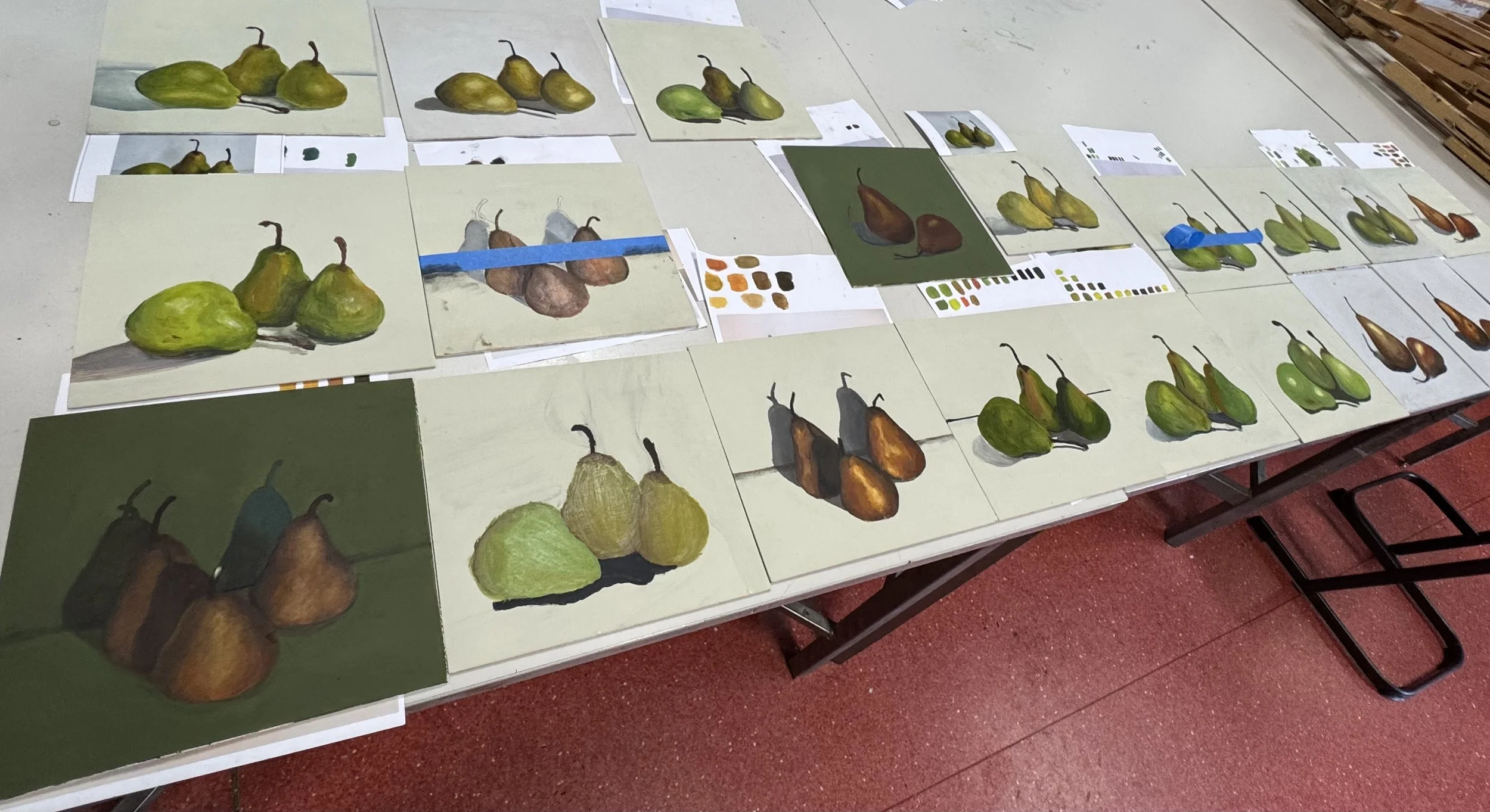
Instead of painting gum blossoms and banksias, we spent the day studying something far more ordinary: pears.
Or perhaps they aren’t ordinary at all.
One of my favourite moments as a teacher is watching people realise that what they think they see and what is actually there are often two completely different things.
A pear isn’t simply green.
Or brown.
Or yellow.
Look a little longer and you’ll discover cool blues hiding in the shadows, warm reds bouncing up from the tabletop, soft violets where the light gently disappears, and tiny shifts in colour that suddenly make a painting come alive.
To help the students experience this for themselves, we worked with a deliberately limited palette.
Rather than reaching for ready-made greens and browns, we mixed almost every colour from just six paints:
Cadmium Yellow Light
Brilliant Alizarin
Ultramarine Blue
Burnt Umber
Payne’s Grey
Titanium White
It can feel a little challenging at first, but that’s exactly the point.
When the colours aren’t already waiting in a tube, you begin looking more carefully. You slow down. You compare one colour with another. You notice subtle temperature shifts and reflected light that would otherwise be missed.
Painting becomes less about copying and more about observing.
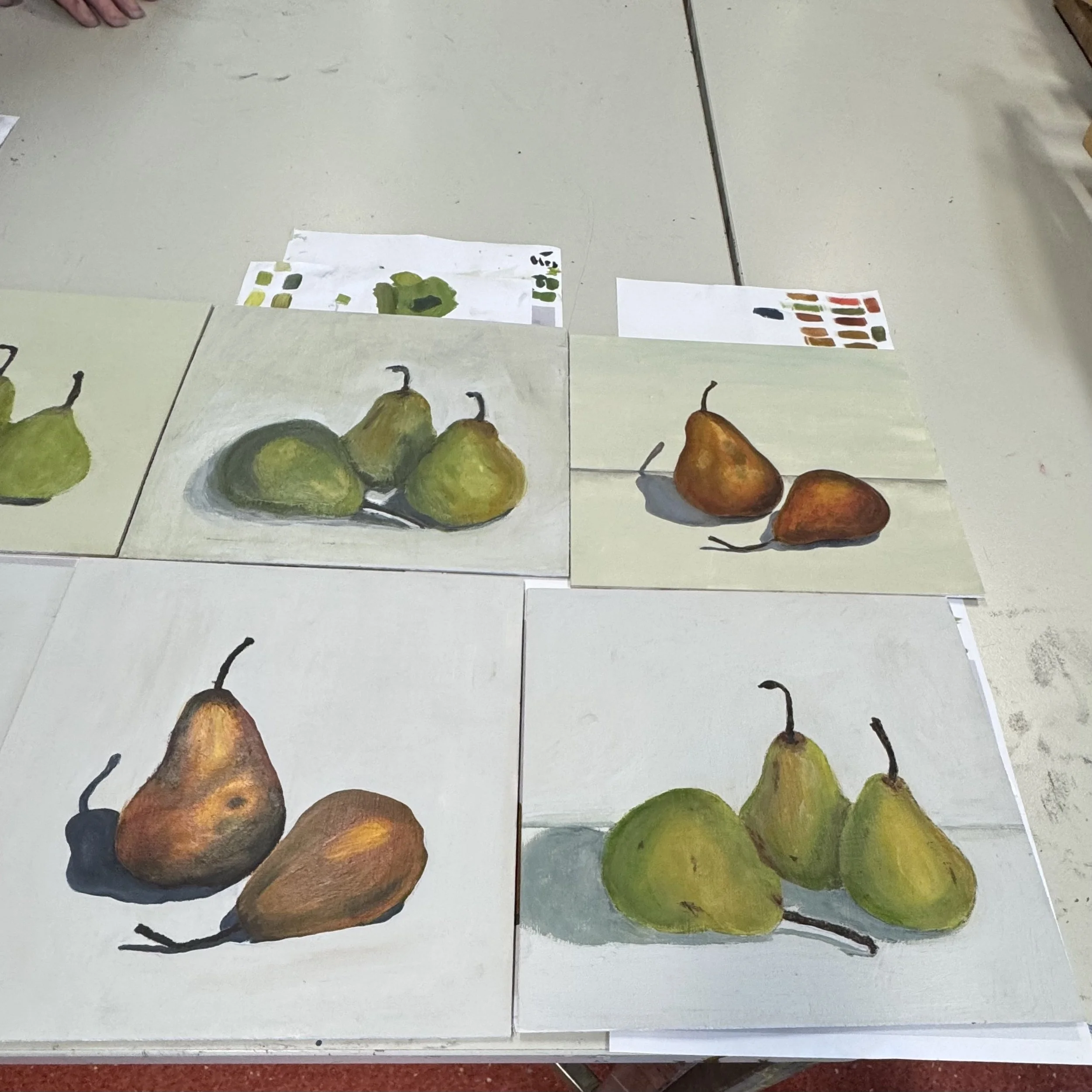
By the end of the day, every student’s pears looked different.
Some were vibrant and fresh, others soft and atmospheric, but each painting reflected the student’s own way of seeing.
That’s one of the things I love most about teaching.
Everyone begins with the same subject, yet no two paintings are ever alike.
As artists, we spend a lifetime learning to notice.
To notice the colours hidden in shadows.
To notice light.
To notice shape.
To notice beauty in things we might otherwise overlook.
Perhaps that’s why I still love painting botanicals after all these years. A gum blossom, a banksia or a simple pear always has something new to reveal if we’re willing to slow down and really look.
And maybe that’s the lesson that extends far beyond painting.
The more carefully we observe the world around us, the richer it becomes.
If you’d like to experience this way of painting for yourself, I’d love to welcome you to one of my workshops.
Whether we’re painting Australian native flowers over a country weekend at Greenhills Art Centre or exploring still life together in Radiant Harvest, my goal is always the same: to help you slow down, trust your eyes, and discover the joy of truly seeing.
Because creativity isn’t about painting the perfect pear.
It’s about learning to notice the extraordinary beauty that’s been there all along.
Enjoyed this?
The Studio Journal is where I share the stories behind my paintings, the beauty I notice while wandering through nature, and the small moments that remind me to slow down and really look.
If these reflections resonate with you, I’d love to welcome you to Studio Letters—my occasional letters from the studio, where I share new paintings, thoughtful stories, and invitations to see the world a little differently.