When the Wattle Blooms, Spring Has Arrived

There is a particular moment I look forward to every year.

The first golden wattles begin to appear.

Suddenly, little bursts of yellow are scattered through the landscape — along roadsides, in bushland, in parks and gardens, and outside my studio window.

It feels as though the Australian landscape has switched on its own little lights.

And I love the way wattle announces spring.

It doesn’t make a fuss. It simply blooms.

And if you’re paying attention, you notice.

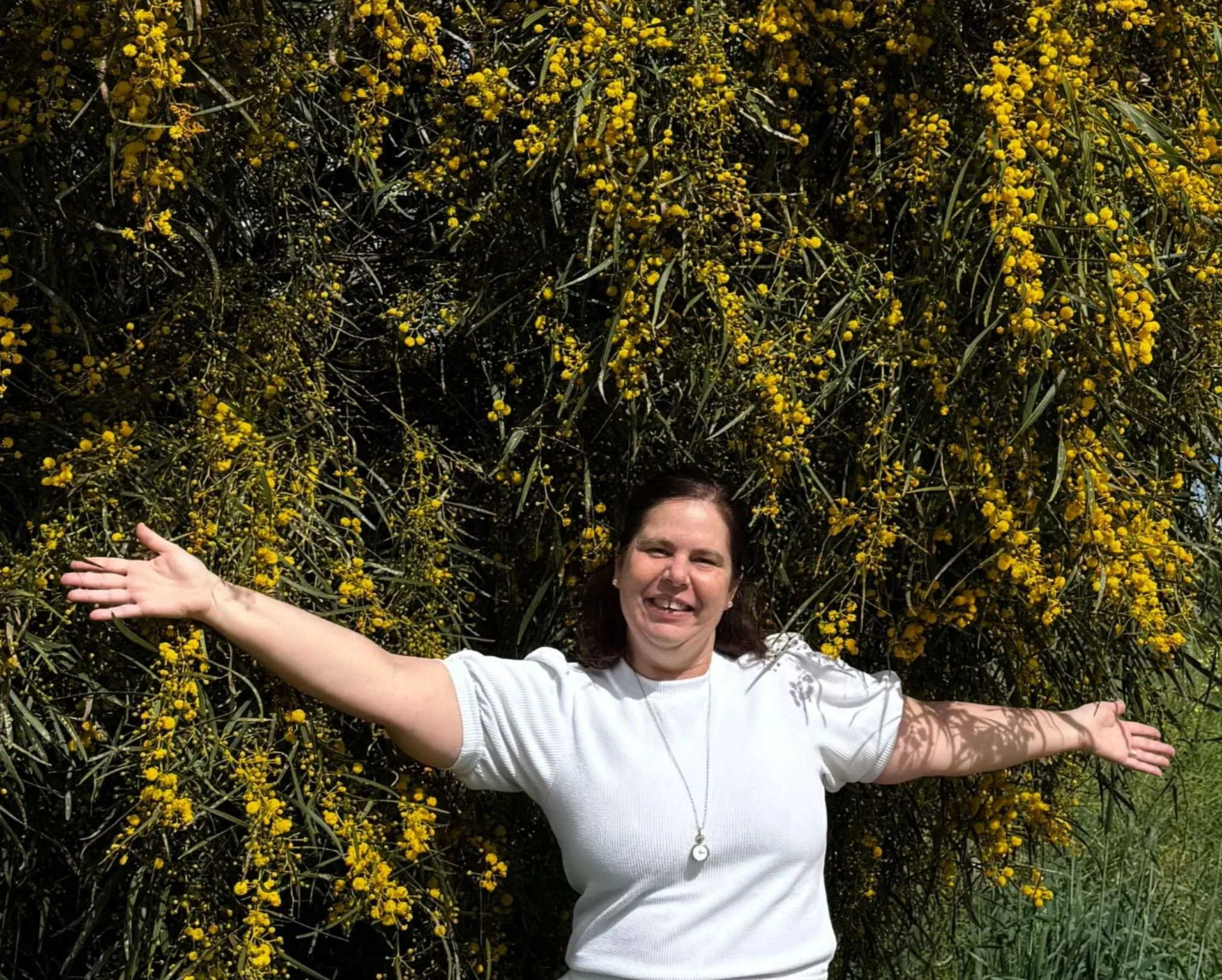
A little sunshine outside my window

This particular wattle was photographed by my husband on the weekend just before spring arrived.

It grows on the other side of the park from my studio, and I’ve watched it change over the years. But every spring, when those first golden flowers appear, I find myself looking at it all over again.

Perhaps that’s one of the reasons I’ve spent so many years painting Australian flora.

There is always something waiting to be noticed.

You can walk past the same tree a hundred times and then, one morning, the light catches it differently, or a flower opens and a new colour just appears.

Something you had completely overlooked suddenly shines brightly enough for you to see it. I love that moment.

The little surprise of discovering something beautiful that was there all along.

The changing Australian landscape

Here in the west, the arrival of wattle is part of the wonderful transition from winter towards spring.

The seasons don’t always arrive with a neat change of date.

They reveal themselves gradually.

A warmer afternoon bringing a different quality of light. Birdsong in the morning. New growth.

And then suddenly — yellow.

For me, these little seasonal changes are part of what makes living in Australia so fascinating.

There is always something happening if we take the time to look.

Why I paint Australian flowers

I think this is why painting Australian flora has become about much more than simply painting flowers for me.

It has taught me to look closely and to notice the tiny details.

To pay attention to colour and light, and to see the familiar with fresh eyes.

And perhaps that’s one of the quiet gifts of creativity.

It makes you look.

You don’t have to be an artist to experience it.

You don’t even have to pick up a paintbrush.

You can simply walk outside and notice what has changed.

The way the afternoon light falls across a tree.

There is so much beauty hiding in plain sight.

A little invitation

So the next time you see golden wattle blooming, I hope you’ll stop for a moment.

Look closely.

Notice the tiny flowers.

Notice the colour.

Notice the way the light catches them.

And perhaps, for just a moment, let yourself be surprised by something that was there all along.

Because sometimes we don’t need to go looking for something extraordinary.

We simply need to notice the extraordinary in what is already around us.
Sometimes You Need to Step Back

There are times in painting when you know something isn’t quite right.

Perhaps the colour isn’t working. Maybe a brushstroke has taken you in the wrong direction, or the painting has become heavier than you intended.

But often, you don’t realise it straight away.

You need to keep going for a while. You need more information. You need to see how everything else develops before you can understand what isn’t working.

And sometimes, it takes another pair of eyes.

Someone who can stand beside you and gently point out something you can no longer see because you’ve been looking at the painting for too long.

When you stop and put down the brush, take a few steps back and look again, you can often see things from another perspective.

I think life can be much the same.

This week has knocked my confidence a little. I’ve found myself replaying things, wondering what I might have done differently and wishing I could go back and approach things another way.

But perhaps there is something to be learned in that too.

Sometimes we don’t have all the information when we make a decision. Sometimes we only understand something properly once we’ve had time to step back from it. And sometimes another person helps us see what we couldn’t see for ourselves.

That doesn’t mean we have to stay stuck in what happened.

We can acknowledge it, learn from it and make an adjustment.

Just as I would with a painting.

A wrong colour doesn’t mean the painting is ruined. A brushstroke in the wrong place doesn’t mean you have to throw the whole thing away.

You work with what is there. You adjust. You paint over it and try again.

Perhaps that’s what I’m reminding myself of this week.

I don’t have to get everything right the first time.

I just need to be willing to stop, step back, look again and make the next brushstroke.

Outside the studio, spring is beginning to announce itself. There are flowers opening, new growth appearing, and little signs of change everywhere I look.

Perhaps that’s a timely reminder.

Things don’t have to stay exactly as they are.

We can pause. We can reassess. We can learn. And we can begin again.

The Moment It Starts to Make Sense

There is a moment in teaching that means more to me than a finished painting.

It is when someone decides to keep going.

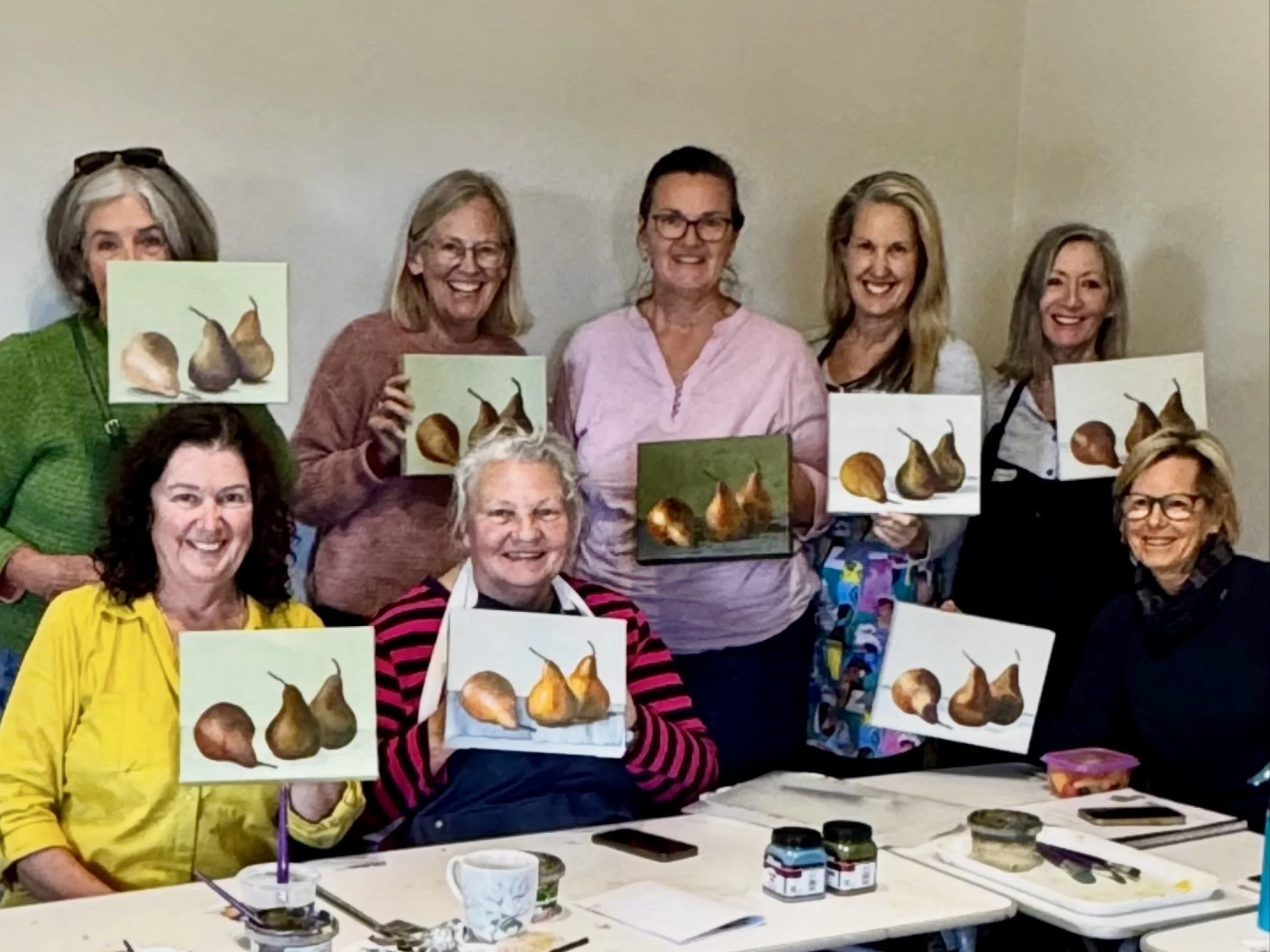
During Flora in Focus, one of my participants was struggling with her painting. By Sunday, she was ready to pack up and leave.

I suggested she take a break. Go for a walk. Come back when she was ready.

When she returned, we worked on the painting together. We looked at what was already there, made a few changes and slowly found our way through the difficult parts.

By the end of the day, she had a beautiful painting to take home.

So when she came back to join me for Radiant Harvest, I was genuinely touched.

She could have decided that painting wasn’t for her.

Instead, she came back.

This time, we painted pears.

And somewhere during the day, something shifted. We worked together briefly on blending and shading, and afterwards she messaged me that she finally felt she understood it. Her confidence had grown, and she was already looking forward to painting more.

That was the highest compliment I could receive as an educator.

Because I don’t think teaching is really about showing someone how to make a painting look like mine.

It’s about helping them find their way into their own painting.

Sometimes that means demonstrating something. Sometimes it means sitting beside someone and looking at the problem together. And sometimes it means saying, put the brush down for a while and come back later.

Painting can be vulnerable. We can become so close to our own work that we can’t see what is actually there anymore.

A little distance can change everything.

And perhaps that’s one of the things I love most about painting: there is nearly always another way forward.

Acrylic paint is forgiving. If you don’t like the result, you can paint over it and simply try again.

Sometimes, that’s all it takes for something to finally make sense.

And sometimes, the most beautiful thing you take home from a workshop isn’t the painting.

It’s the confidence to pick up the brush again.

What Remains

Most people notice Australian natives when in flower. The blossoms are impossible to ignore—vibrant, joyful and alive with birds and bees. I never tire of painting them. But if you’ve ever wandered through Kings Park with me, you’ll know my attention rarely stops at the blossom. I often find myself looking at what remains.

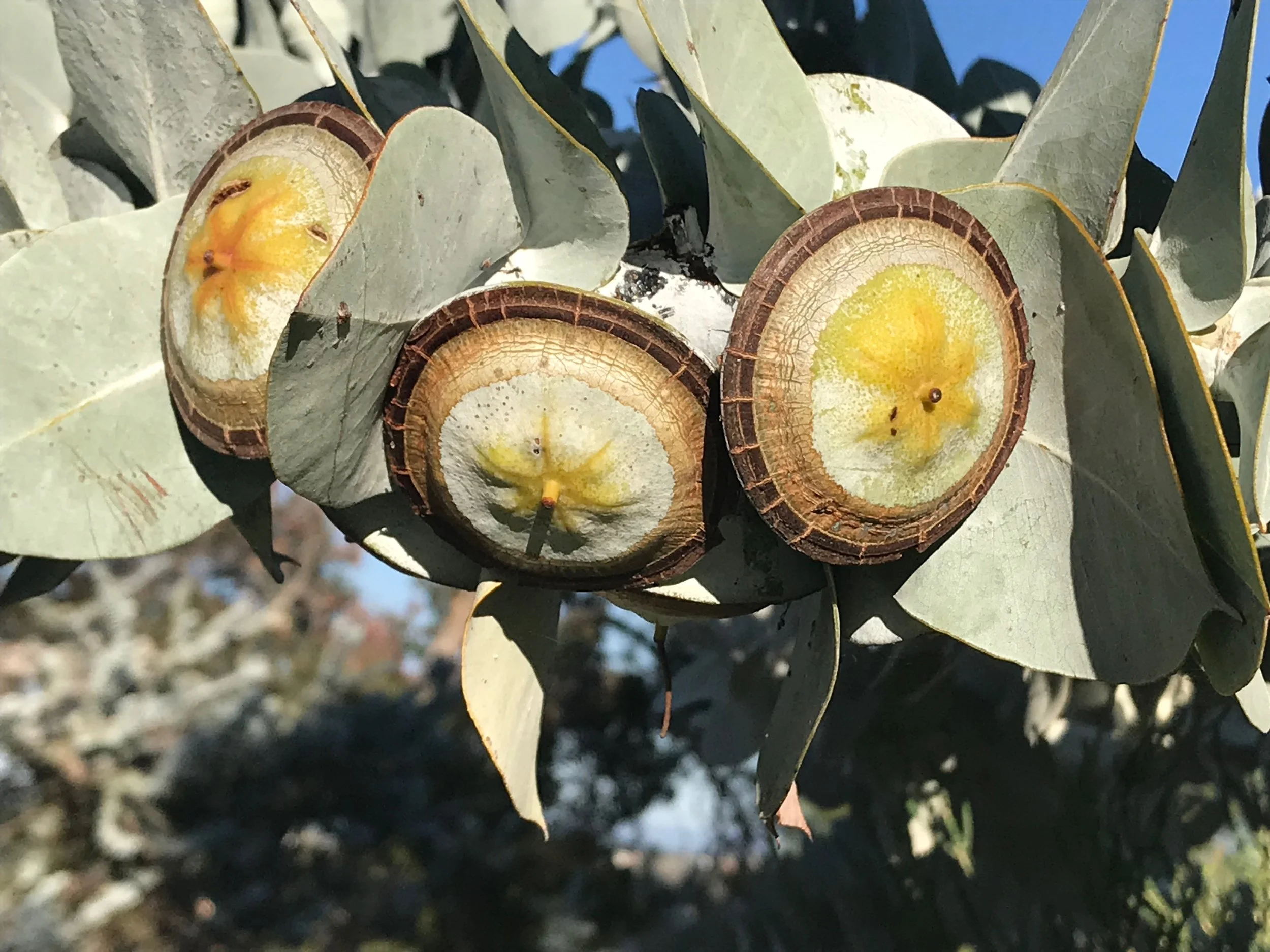
Long after the flowers have faded, the seed capsules stay quietly on the branch. They’re small, weathered and easily overlooked. Most people walk straight past them. Sometimes, I find them even more intriguing than the flowers themselves. That probably sounds a little peculiar. Yet the more time I spend with them, the more I notice. Their colours are constantly changing. Fresh seed capsules glow with vibrant greens and yellows before slowly softening into warm ochres, silvery greys and rich earthy browns. With time they become beautifully weathered, reminding me of driftwood shaped by years of wind, rain and sunshine.

Every stage has its own quiet beauty.The longer I look, the more fascinated I become by their remarkable architecture. Tiny chambers. Beautiful symmetry. Strong sculptural forms that once protected new life before gently releasing it into the world. They are strong, resilient, and extraordinarily beautiful.

Over the years I’ve realised that’s probably why I keep returning to them in my paintings. They remind me that nature is never only beautiful in its brightest, most obvious moments. Sometimes its deepest beauty is quietly waiting underneath. It makes me wonder how often we do the same in our own lives. We naturally celebrate life’s seasons of colour, growth and abundance. Yet there are quieter seasons too. Seasons that feel weathered. Seasons where life has stripped everything back. Nature gently reminds me that these seasons aren’t empty.

There is beauty there too. Not the loud beauty of blossoms demanding to be noticed, but a quieter beauty. One shaped by time, strength and experience. The kind of beauty that only reveals itself when we’re willing to slow down and really look.

Perhaps that’s why I keep painting these humble seed capsules. Not because they’re unusual. But because they quietly invite us to see beyond the surface. To discover that what remains can sometimes be every bit as beautiful as what came before.

And perhaps that’s true of us, too.

Enjoyed this?

The Studio Journal is where I share the stories behind my paintings, the beauty I notice while wandering through nature, and the small moments that remind me to slow down and really look.

If these reflections resonate with you, I’d love to welcome you to Studio Letters—my occasional letters from the studio, where I share new paintings, thoughtful stories, and invitations to see the world a little differently.

→ Join Studio Letters

Some Paintings Need Time

There are paintings that arrive quickly.

And then there are paintings that quietly wait for us.

Holding Light was one of those.

She began life as a demonstration painting during one of my workshops at Greenhills Art Centre in Western Australia. The following week, life took an unexpected turn as I headed back into surgery. The painting stayed exactly where I’d left her, resting on the easel in the corner of my studio.

For months, every time I walked through the room, I’d glance across at her and think, I’ll come back to you soon.

But “soon” has a way of stretching when life asks something different of us.

There were appointments to attend, family to care for, workshops to prepare and the quiet work of healing that can’t be hurried. The days filled themselves, as they always do, and the painting continued to wait.

This winter, I finally picked up my brushes again.

As I mixed colours and began laying down those final layers of paint, something unexpected occurred to me.

Perhaps the painting hadn’t been waiting for me at all.

Perhaps we’d both simply been waiting for the right time.

It felt a little like catching up with an old friend.

As each brushstroke found its place, I realised Holding Light couldn’t have been finished any earlier. She needed time, just as I did.

I think we often imagine an artist’s life as one painting flowing neatly into the next.

In reality, creativity moves with the rhythm of ordinary life.

Paintings wait while we heal.

They wait while we care for the people we love.

They wait while washing piles mysteriously multiply, diaries become crowded and mornings begin before we’re quite ready for them.

The work doesn’t disappear.

It simply waits with remarkable patience.

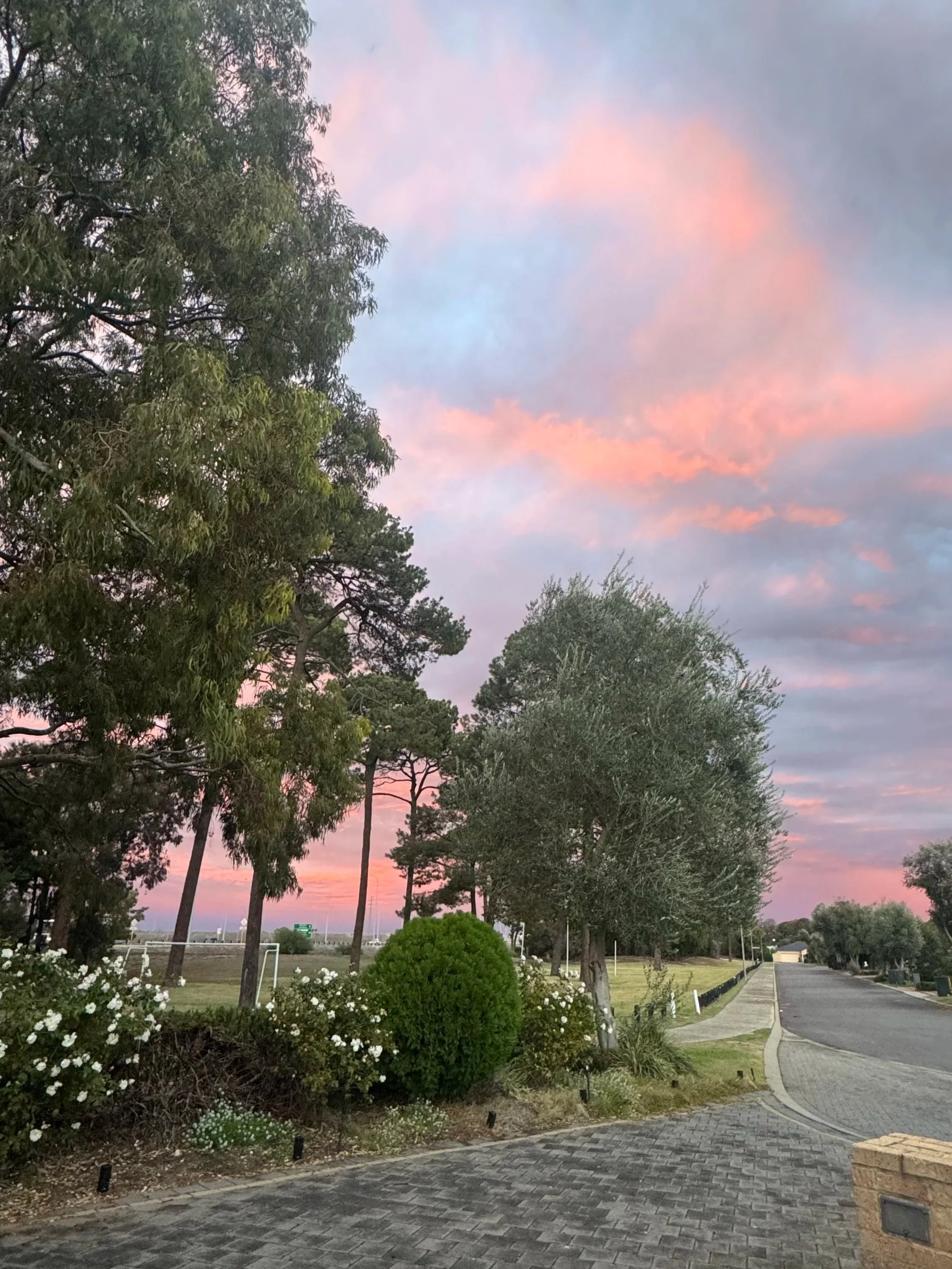
Lately, as I’ve been driving across Perth on crisp winter mornings, the sunrise has become my quiet companion. I’m not naturally a morning person, but winter has one wonderful advantage—it brings dawn to a much more civilised hour.

Soft pinks spill across the sky. Gentle gold light catches the eucalyptus trees before the day properly begins.

Those fleeting moments remind me why I paint.

Not simply to paint flowers or fruit.

But to notice.

To hold onto a little of that quiet beauty before it disappears.

Perhaps that’s what creativity asks of us more than anything else.

Not constant productivity.

Not perfection.

Simply attention.

Because creativity isn’t something that vanishes when life becomes busy. It doesn’t stop belonging to us because we’ve stepped away for a while.

It waits.

Patiently.

Ready for the moment we return.

Perhaps there is something quietly waiting for you too.

A sketchbook.

A garden.

A half-finished project.

A conversation.

Or simply the time to notice the winter light falling across your kitchen table.

If so, I hope you know there’s no rush.

Some beautiful things simply need time.

Enjoyed this?

The Studio Journal is where I share the stories behind my paintings, the beauty I notice while wandering through nature, and the small moments that remind me to slow down and really look.

If these reflections resonate with you, I’d love to welcome you to Studio Letters—my occasional letters from the studio, where I share new paintings, thoughtful stories, and invitations to see the world a little differently.

→ Join Studio Letters

The Day I Learned to See Kings Park

For almost ten years after moving to Western Australia, I didn’t really understand Kings Park.

I’d visit for the beautiful views across the Swan River and the city skyline, but the gardens themselves left me a little underwhelmed. Compared to the grand botanical gardens I’d visited elsewhere, there were no sweeping displays of colourful flowers.

Instead, there was bushland.

It wasn’t until much later that I realised that was exactly what made it so extraordinary.

Western Australia is home to one of the richest collections of plant life in the world. The south-west of our state is recognised internationally as a biodiversity hotspot, with thousands of plant species found nowhere else on Earth. Kings Park celebrates this remarkable flora, bringing together the largest collection of Western Australian native plants in one place while protecting large areas of natural bushland.

Back then, though, I didn’t know any of that.

To me, a eucalyptus was simply… a eucalyptus.

Everything changed during a walk through Kings Park with an artist friend in 2018.

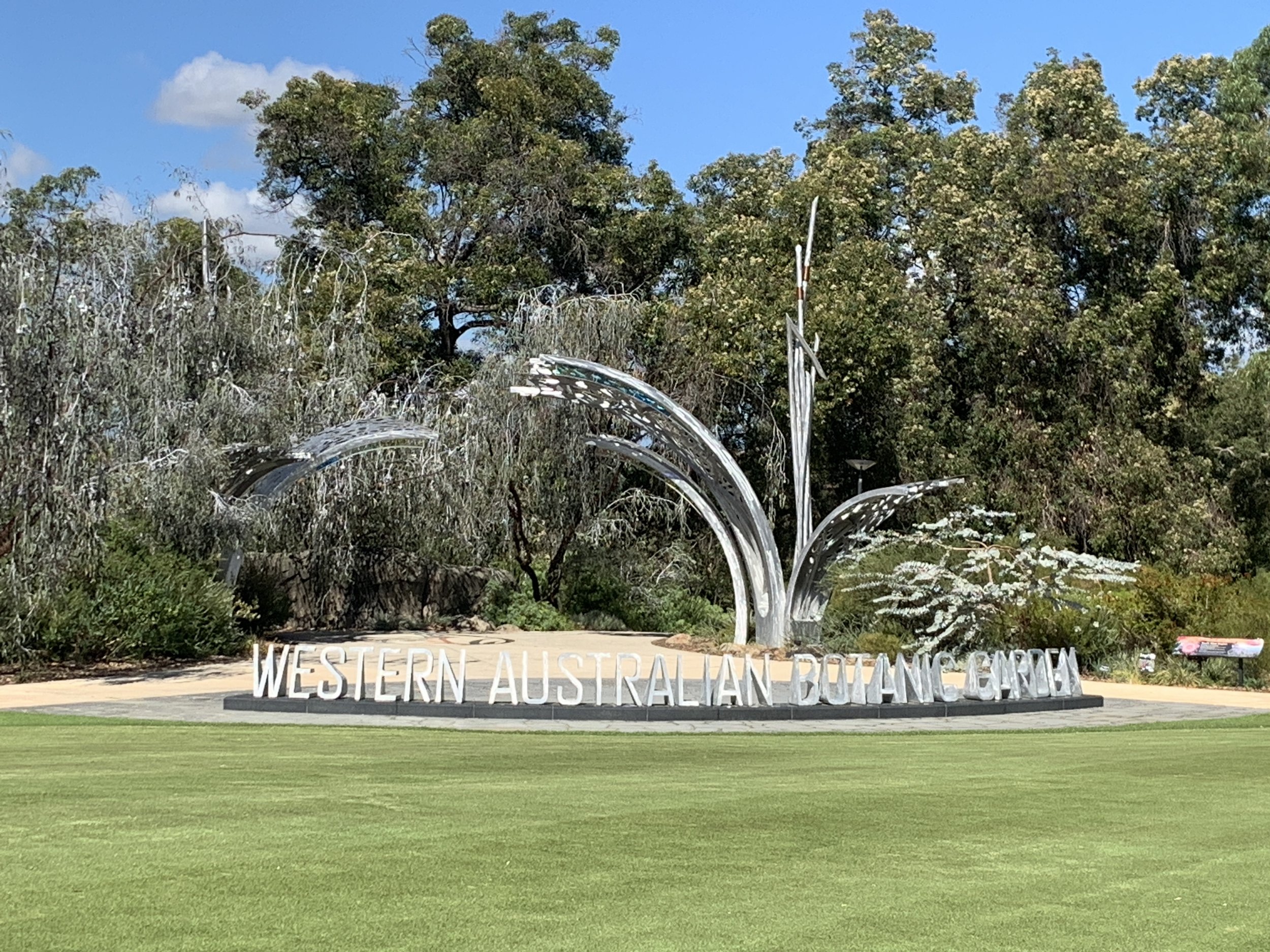
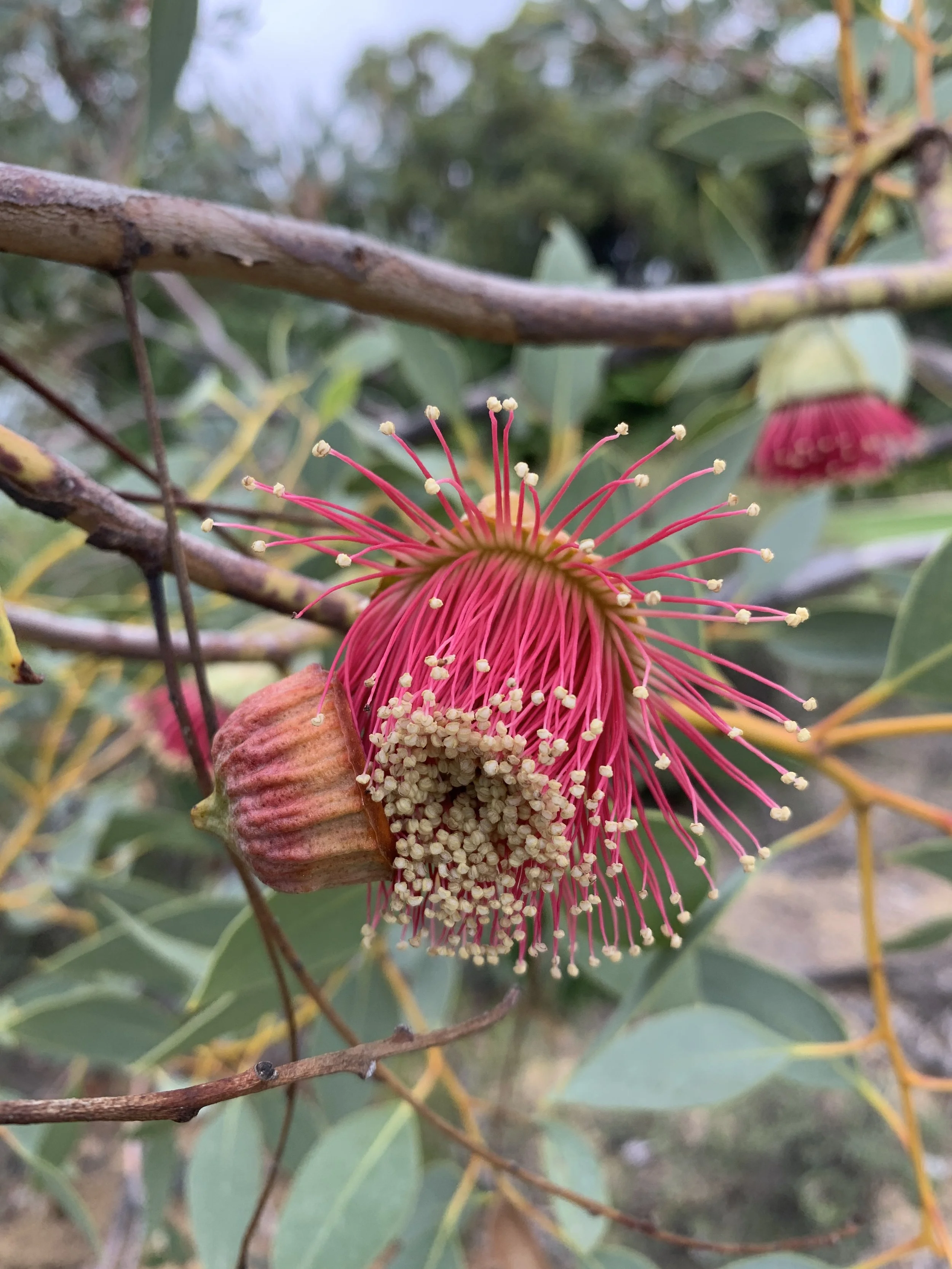
As we wandered through the Western Australian Botanic Garden, she stopped beneath a flowering Eucalyptus pyriformis.

“Have you ever seen one of these?” she asked.

I hadn’t.

Standing beneath those deep crimson blossoms, I suddenly realised I’d been walking past these incredible trees for years without ever noticing them.

A little further along the path, another tree grabbed my attention..

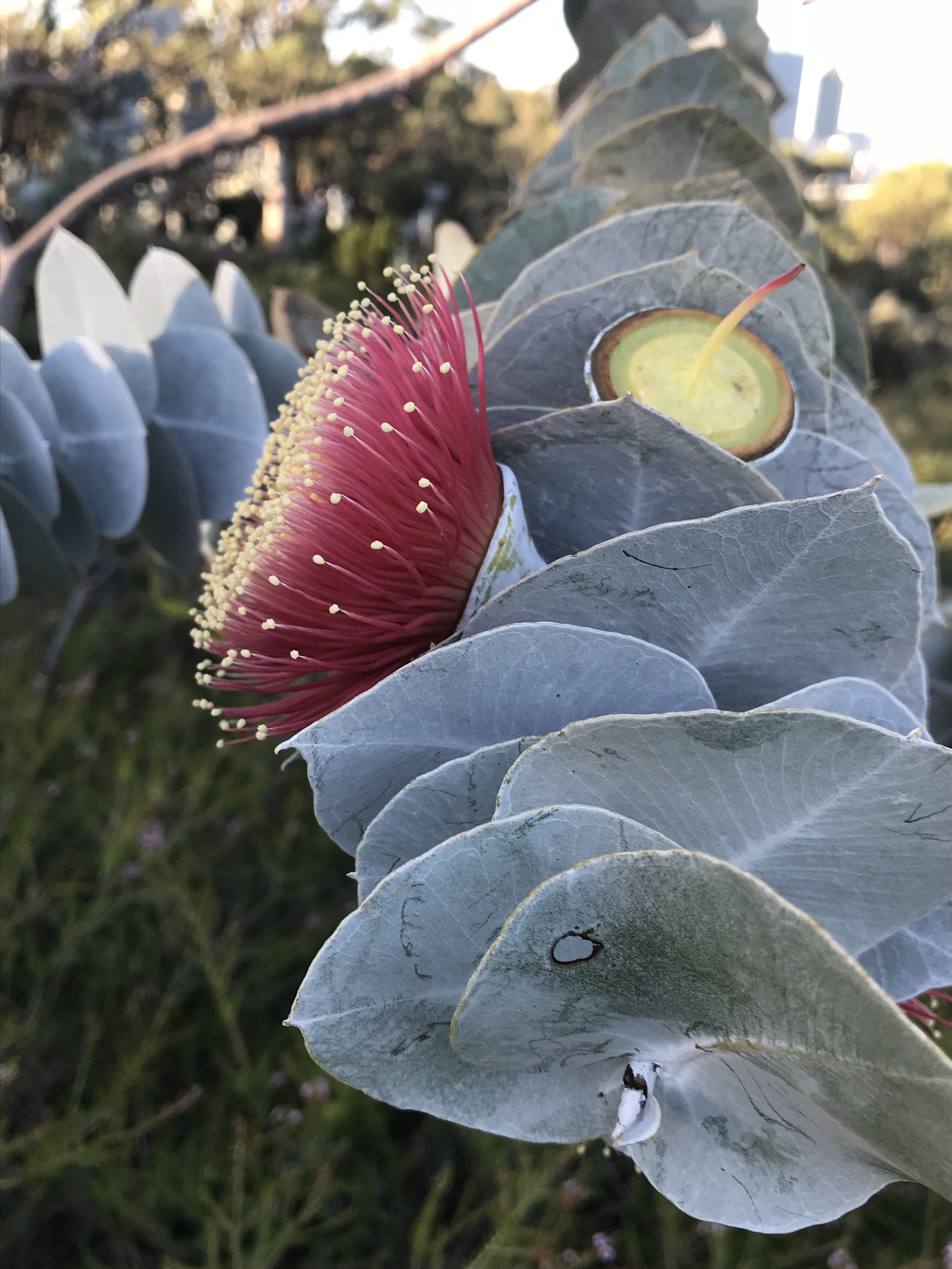
It was a Eucalyptus macrocarpa.

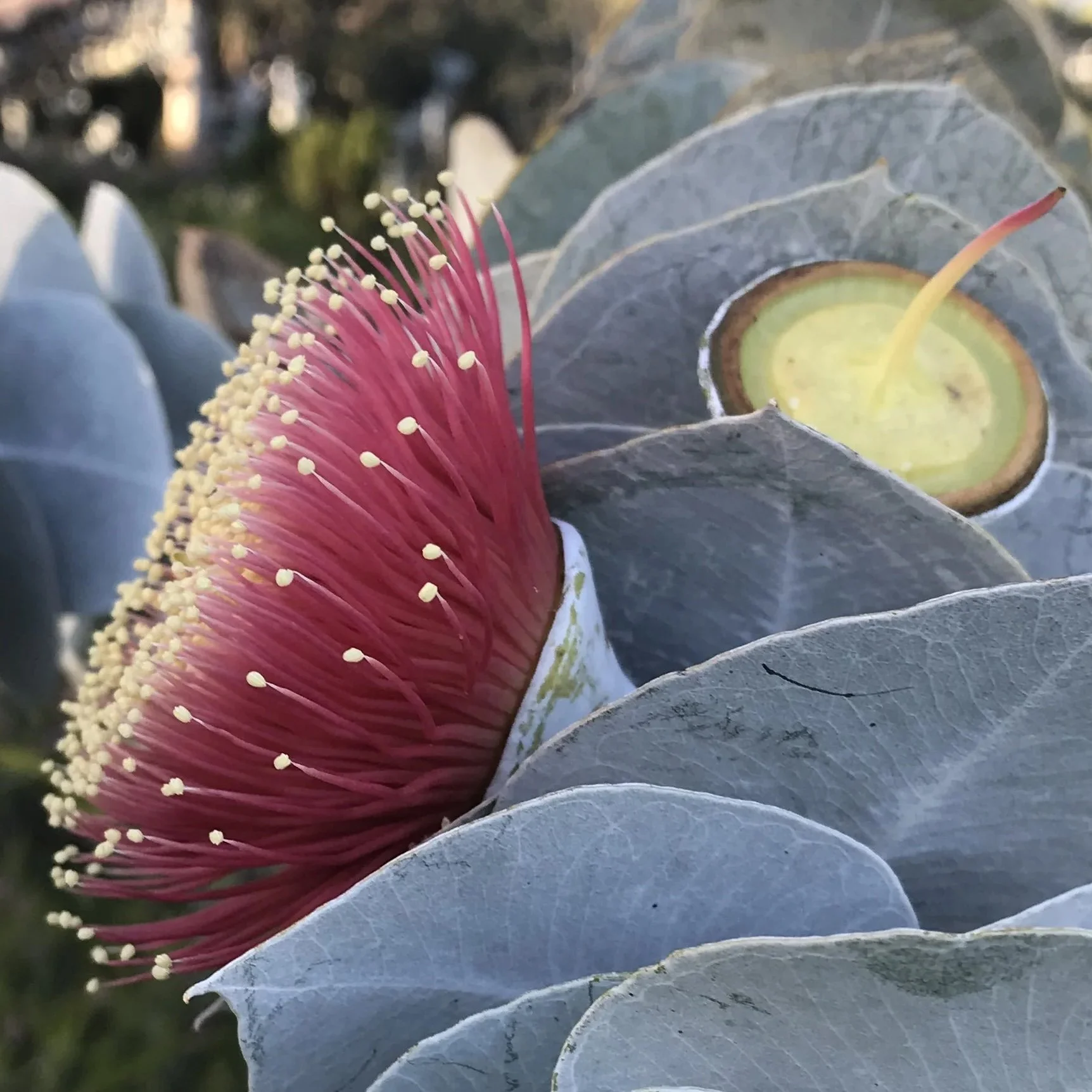
Its enormous silver-blue leaves framed velvety crimson flowers dusted with golden pollen. It was unlike anything I’d ever seen before. A flower as big as my head!

Not long afterwards, I painted my first Australian native flower.

I called it Emergence.

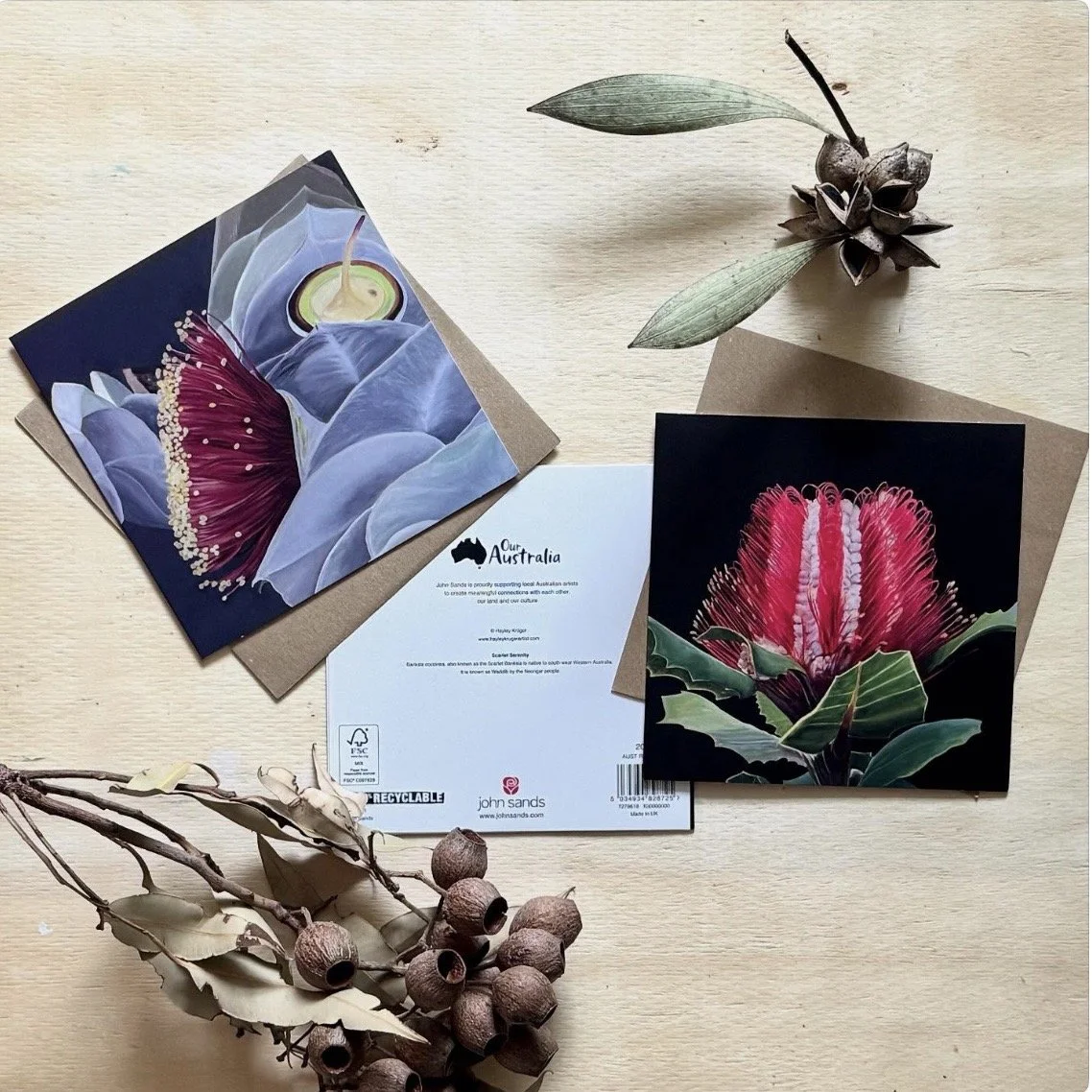
Looking back, the name seems strangely fitting. That painting marked the beginning of a completely new direction in my work. It was later licensed as part of John Sands’ Our Australia greeting card collection, but its greatest gift was introducing me to the extraordinary beauty of Australia’s native flora.

Since then, I’ve painted many species, but the graceful Silver Princess (Eucalyptus caesia) has become one of my favourites. Every flower has its own personality, and every season offers something new to discover.

These days, I still walk through Kings Park with my camera.

Sometimes I come home with hundreds of photographs.

Sometimes just one.

But I’ve learned that one photograph can become a painting, and one moment of noticing can change the way you see the world.

I often think about the person I was when I first arrived in Western Australia, wondering what everyone else loved about Kings Park.

Now I understand.

Kings Park didn’t change.

I did.

Enjoyed this?

The Studio Journal is where I share the stories behind my paintings, the beauty I notice while wandering through nature, and the small moments that remind me to slow down and really look.

If these reflections resonate with you, I’d love to welcome you to Studio Letters—my occasional letters from the studio, where I share new paintings, thoughtful stories, and invitations to see the world a little differently.

→ Join Studio Letters

The Quiet Gift of Paying Attention

This morning, as I sat with my first cup of coffee, the soft pink light of a winter sunrise filtered through the eucalyptus trees across the park. The branches moved gently in the breeze while the scent of woodsmoke drifted from nearby fireplaces. It lasted only a few minutes before the light changed, but it was enough to stop me where I was.

Moments like these remind me why I paint.

People often ask what inspires my work, expecting me to name a particular flower or a favourite place. The truth is, inspiration rarely arrives in grand moments. More often, it quietly appears while I’m making a cup of tea, walking through Kings Park, arranging a few pears on the studio table, or noticing how the afternoon light falls across my studio table.

Painting has changed the way I look at the world.

Before I became an artist, I probably would have admired a eucalyptus tree and kept walking. Now I find myself noticing the soft blue-grey on one leaf, the warm blush hidden inside a gum blossom, or the tiny shadows that make a banksia cone feel almost sculptural.

The more I paint, the more I realise that beauty rarely demands our attention. It simply waits for us to notice it.

I think that’s one of the unexpected gifts of having a creative practice. It trains your eyes long before it trains your hands.

People often tell me they wish they had more creativity in their lives. What they usually mean is that they wish they had more time.

Time to slow down.

Time to notice.

Time to make something simply because it brings them joy.

I don’t believe creativity belongs only to artists. I think it’s something we’re all born with. Sometimes it just gets buried beneath busy schedules, responsibilities and the feeling that creating needs to be productive to be worthwhile.

Perhaps creativity begins much earlier than we think.

Perhaps it begins with noticing the winter light on a eucalyptus tree, the colours hiding in the skin of a pear, or the quiet satisfaction of sitting with a cup of tea before the day begins.

The painting comes later.

Seeing comes first.

As I continue painting the quiet beauty of Australia, I hope my work encourages others to pause every now and then and look a little more closely. There is so much beauty woven into ordinary days, waiting patiently for someone to notice it.

Thank you for spending a little time with me here.

Warmly,

Hayley

View out my studio window

Enjoyed this?

The Studio Journal is where I share the stories behind my paintings, the beauty I notice while wandering through nature, and the small moments that remind me to slow down and really look.

If these reflections resonate with you, I’d love to welcome you to Studio Letters—my occasional letters from the studio, where I share new paintings, thoughtful stories, and invitations to see the world a little differently.

→ Join Studio Letters

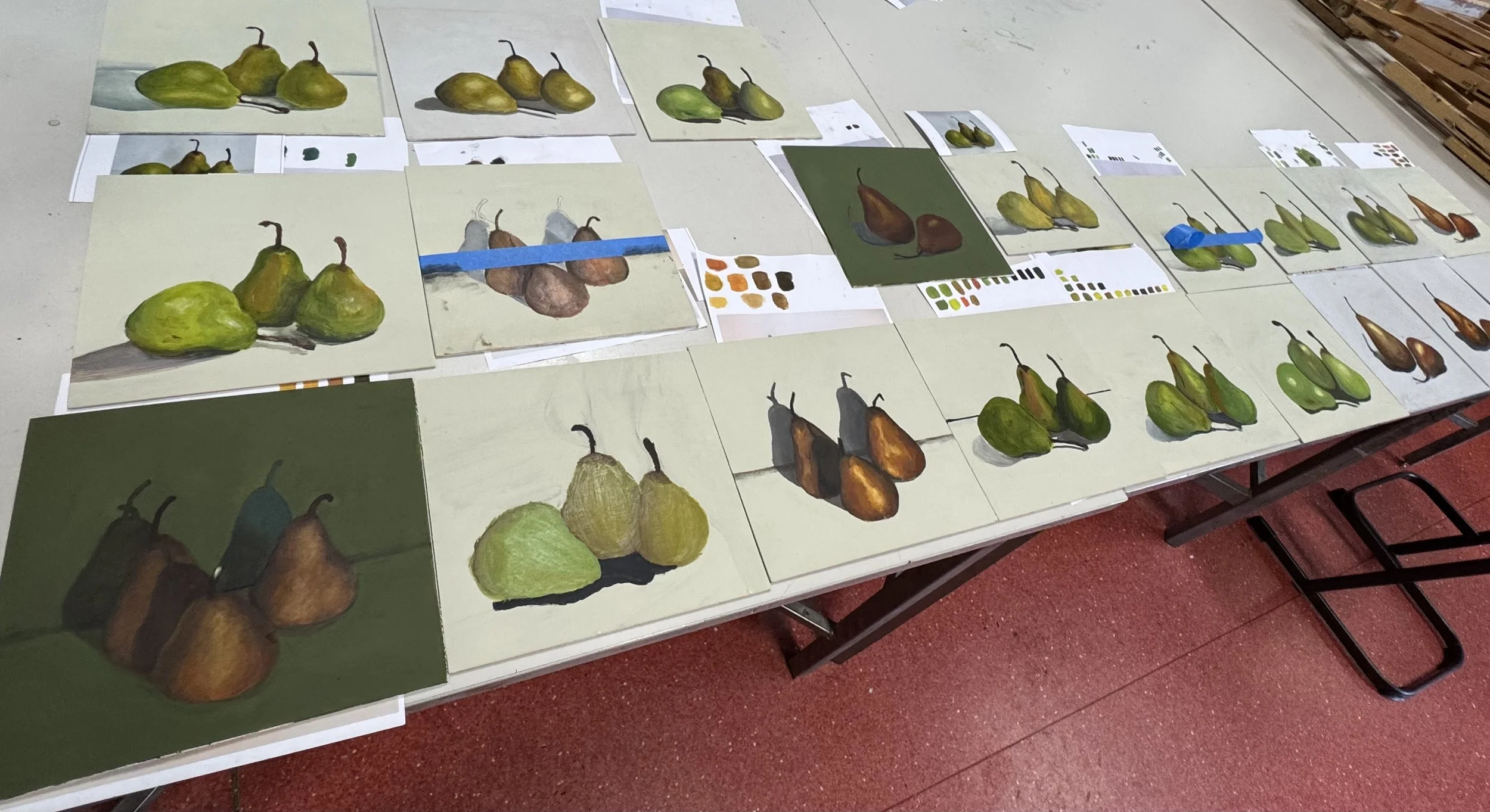
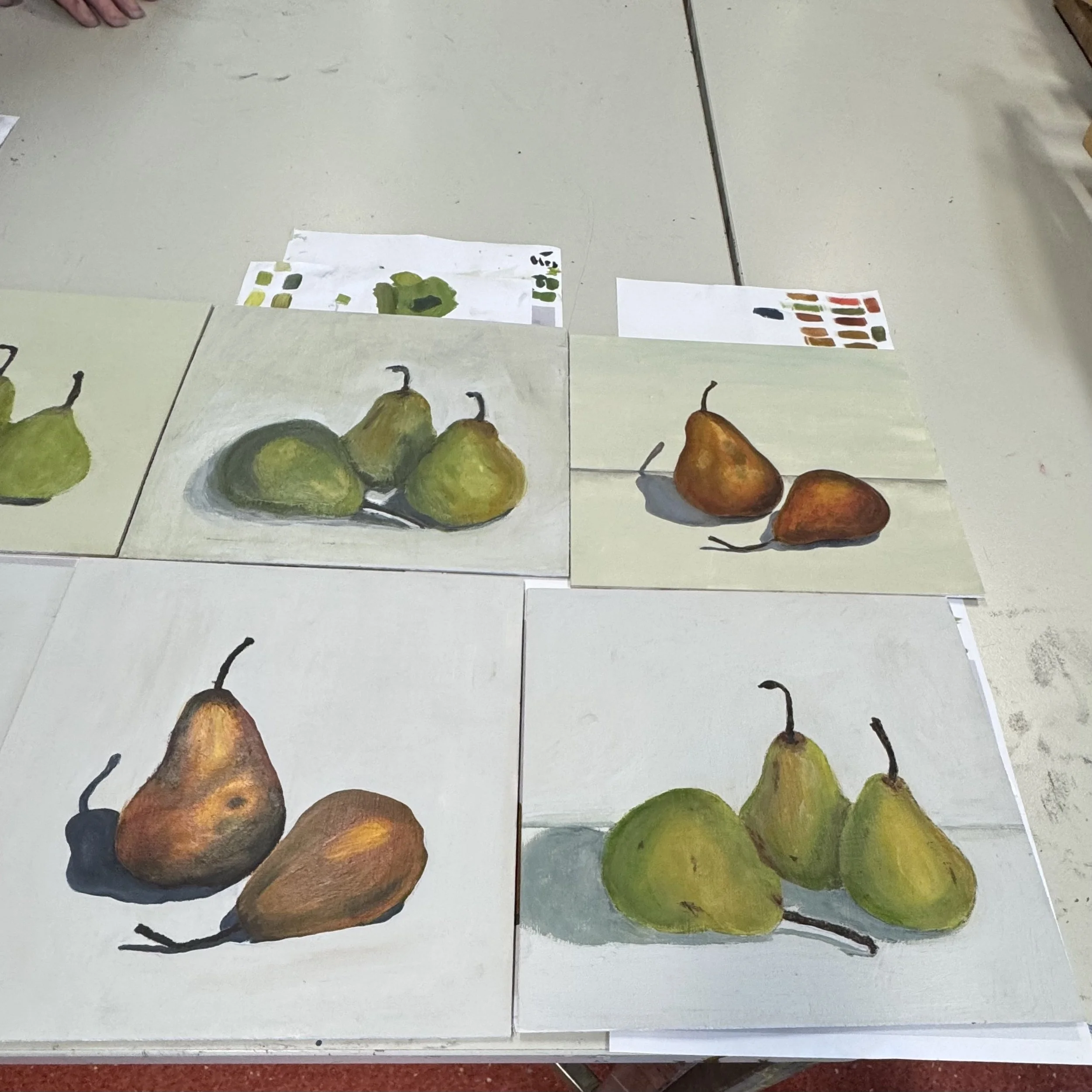
What Painting Pears Can Teach Us About Really Seeing

Yesterday I swapped my quiet Swan Valley studio for the lively energy of a Year 9 specialist art classroom.

Instead of painting gum blossoms and banksias, we spent the day studying something far more ordinary: pears.

Or perhaps they aren’t ordinary at all.

One of my favourite moments as a teacher is watching people realise that what they think they see and what is actually there are often two completely different things.

A pear isn’t simply green.

Or brown.

Or yellow.

Look a little longer and you’ll discover cool blues hiding in the shadows, warm reds bouncing up from the tabletop, soft violets where the light gently disappears, and tiny shifts in colour that suddenly make a painting come alive.

To help the students experience this for themselves, we worked with a deliberately limited palette.

Rather than reaching for ready-made greens and browns, we mixed almost every colour from just six paints:

  • Cadmium Yellow Light

  • Brilliant Alizarin

  • Ultramarine Blue

  • Burnt Umber

  • Payne’s Grey

  • Titanium White

It can feel a little challenging at first, but that’s exactly the point.

When the colours aren’t already waiting in a tube, you begin looking more carefully. You slow down. You compare one colour with another. You notice subtle temperature shifts and reflected light that would otherwise be missed.

Painting becomes less about copying and more about observing.

By the end of the day, every student’s pears looked different.

Some were vibrant and fresh, others soft and atmospheric, but each painting reflected the student’s own way of seeing.

That’s one of the things I love most about teaching.

Everyone begins with the same subject, yet no two paintings are ever alike.

As artists, we spend a lifetime learning to notice.

To notice the colours hidden in shadows.

To notice light.

To notice shape.

To notice beauty in things we might otherwise overlook.

Perhaps that’s why I still love painting botanicals after all these years. A gum blossom, a banksia or a simple pear always has something new to reveal if we’re willing to slow down and really look.

And maybe that’s the lesson that extends far beyond painting.

The more carefully we observe the world around us, the richer it becomes.

If you’d like to experience this way of painting for yourself, I’d love to welcome you to one of my workshops.

Whether we’re painting Australian native flowers over a country weekend at Greenhills Art Centre or exploring still life together in Radiant Harvest, my goal is always the same: to help you slow down, trust your eyes, and discover the joy of truly seeing.

Because creativity isn’t about painting the perfect pear.

It’s about learning to notice the extraordinary beauty that’s been there all along.

Enjoyed this?

The Studio Journal is where I share the stories behind my paintings, the beauty I notice while wandering through nature, and the small moments that remind me to slow down and really look.

If these reflections resonate with you, I’d love to welcome you to Studio Letters—my occasional letters from the studio, where I share new paintings, thoughtful stories, and invitations to see the world a little differently.

→ Join Studio Letters

Being Seen: What Sitting for a Figure Painting Group Taught Me

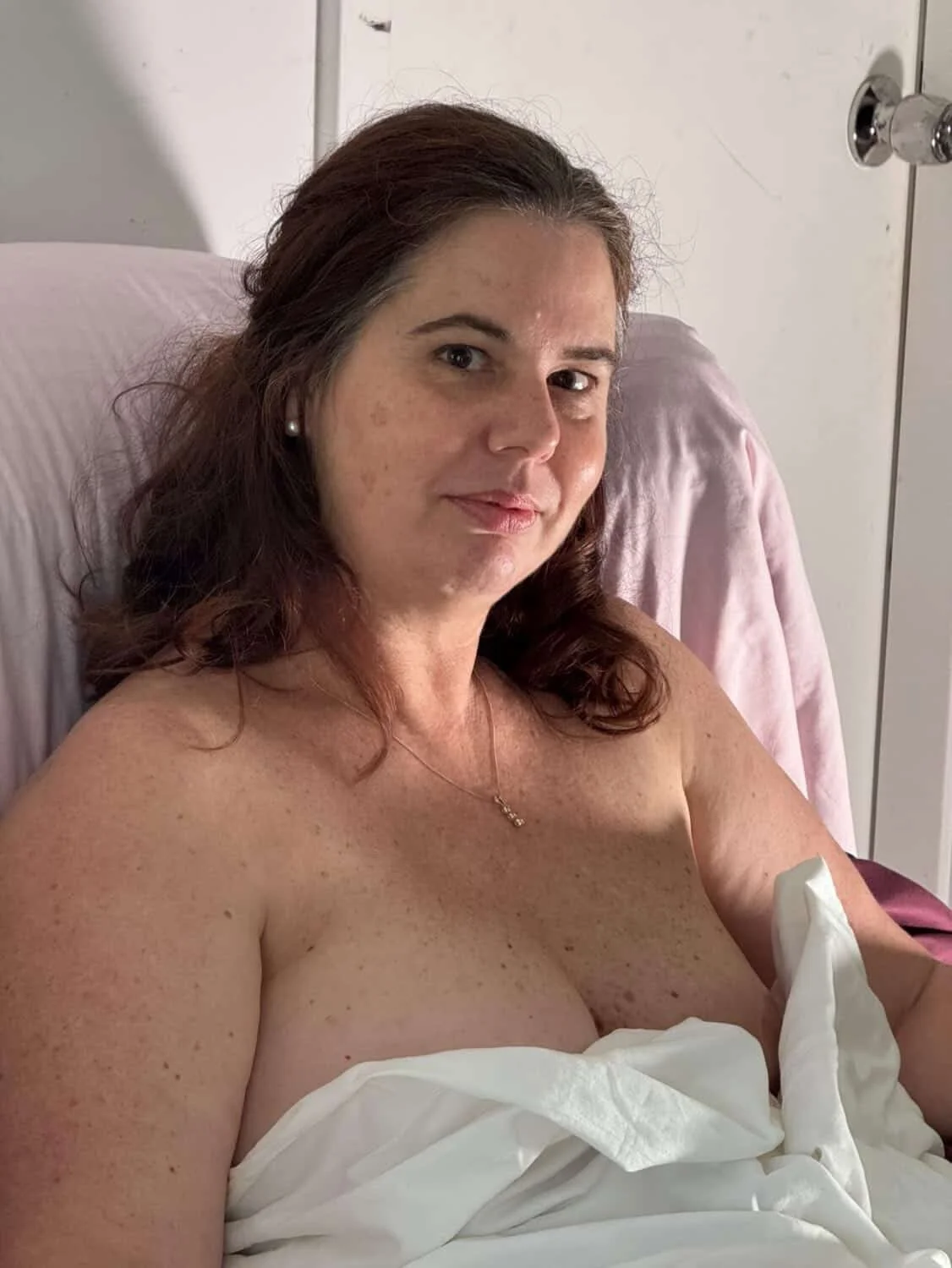
A few months after my breast cancer diagnosis, I had the opportunity to pose for a figure painting group.

If you’d asked me a year ago whether I would ever sit topless in a room full of artists while they painted me, I would have laughed.

Yet there I was.

Not because I felt particularly confident.

Not because I loved every change my body had been through.

But because life has a way of asking us to step into places we never expected.

As the artists worked, conversations unfolded around the room. We spoke about breast cancer, surgery, healing and the complicated relationship many women have with their bodies.

We talked about scars.

We talked about ageing.

We talked about how our bodies carry the stories of our lives.

For months, my body had been viewed through a medical lens. Mammograms, ultrasounds, biopsies, consultations, surgery and treatment plans. My breasts had become something to measure, examine and discuss.

This felt different.

For the first time in a long while, I was being seen not as a patient, but as a person.

Not as a diagnosis, but as a woman.

An artist’s model.

A storyteller.

A body worthy of observation, exactly as it was.

Sitting there, I realised something unexpected.

The things I was most self-conscious about were not what the artists saw.

They weren’t looking for perfection.

They were looking for light, shape, colour, form and humanity.

They were searching for what makes us beautifully human.

The experience reminded me of something I try to bring into my own paintings.

When I paint a flower, I am not searching for perfection. Often it’s the bent petal, the weathered leaf or the unexpected shadow that captures my attention.

The imperfections tell the story.

Perhaps the same is true for us.

Breast cancer has changed my body.

There are scars now.

There are reminders of what happened.

There are days when I still feel frustrated by the changes.

But there is also gratitude.

Gratitude for healing.

Gratitude for strength.

Gratitude for a body that continues to carry me through this season.

As I sat for the artists that day, I wasn’t thinking about being brave.

I was simply showing up as I am.

And perhaps there is something beautiful in that.

Allowing ourselves to be seen.

Not despite our scars.

But with them.

Because they are part of our story.

And every story deserves to be told.

— Hayley xxx

Enjoyed this?

The Studio Journal is where I share the stories behind my paintings, the beauty I notice while wandering through nature, and the small moments that remind me to slow down and really look.

If these reflections resonate with you, I’d love to welcome you to Studio Letters—my occasional letters from the studio, where I share new paintings, thoughtful stories, and invitations to see the world a little differently.

→ Join Studio Letters

A Vibrant Start to “Perfectly Still”

Opening nights are always a whirlwind.

Months of preparation suddenly come together in a few short hours as the doors open, conversations begin, and artwork finally finds its audience.

Perfectly Still was no exception.

Held in Fremantle’s beautiful Moore’s Building, the exhibition brought together nine Western Australian women artists, each exploring still life and botanical subjects through their own unique lens. While our styles varied, we shared a love of slowing down and paying attention to the beauty found in everyday objects, flowers, fruit, vessels, and the quiet moments that often pass unnoticed.

For me, the exhibition represented more than simply showing new work.

It was an opportunity to celebrate the extraordinary beauty of the natural world through paintings inspired by Australian flora. Many of the pieces featured flowers and seedpods collected during walks through Kings Park and my local surroundings—subjects that continue to inspire my practice today.

One of the greatest joys of exhibiting is seeing how different people connect with different artworks. A painting that I may have overlooked during the creation process often becomes someone’s favourite, while another viewer may be drawn to a tiny detail that reminds them of a personal memory.

Those conversations are one of the reasons I love sharing my work.

Me being me with my heart and soul on the walls behind me.

Enjoyed this?

The Studio Journal is where I share the stories behind my paintings, the beauty I notice while wandering through nature, and the small moments that remind me to slow down and really look.

If these reflections resonate with you, I’d love to welcome you to Studio Letters—my occasional letters from the studio, where I share new paintings, thoughtful stories, and invitations to see the world a little differently.

→ Join Studio Letters

WHY I PAINT FLOWERS

People often ask why I paint flowers. The answer has changed over the years.

When I first began painting Australian flora, I was drawn to the colours, shapes and textures. The intricate details of a banksia cone, the delicate fringe of a gum blossom, the sculptural beauty of a seed pod. As an artist, I found endless inspiration in the extraordinary plants that grow around us. But over time, I realised I wasn’t really painting flowers. I was painting wonder.

Many of the plants I paint are ordinary sights in Western Australia. We pass them on walks, see them growing beside roads, or overlook them completely. Yet when you stop and truly look, they reveal remarkable beauty.

A gum blossom becomes a burst of fireworks. A banksia becomes a study in resilience. A seed pod becomes a sculpture.Painting allows me to slow down and spend time with these small moments that might otherwise be missed.

My journey as an artist has taught me that beauty isn’t reserved for grand landscapes or extraordinary events. Often it is found in the quiet details of everyday life. A single flower. A fallen leaf. The light catching the edge of a petal. The older I get, the more important this feels. Life moves quickly. We rush from one responsibility to the next, often forgetting to notice what is right in front of us. Painting gives me permission to pause, and my hope is that my artwork invites others to pause too.

Each painting begins with observation, but it ends with connection. A collector may see a banksia and remember a childhood holiday. Someone else may be reminded of a loved one’s garden. Another may simply feel a sense of calm. Those connections are what matter most to me. While my paintings feature flowers, leaves and seed pods, they are really about paying attention to the world around us and finding joy in the ordinary.

Because sometimes the most beautiful things are the ones we almost walked past.seed pod becomes a sculpture. Painting allows me to slow down and spend time with these small moments that might otherwise be missed.

My journey as an artist has taught me that beauty isn’t reserved for grand landscapes or extraordinary events. Often it is found in the quiet details of everyday life. A single flower. A fallen leaf. The light catching the edge of a petal. The older I get, the more important this feels.

Life moves quickly. We rush from one responsibility to the next, often forgetting to notice what is right in front of us. Painting gives me permission to pause, and my hope is that my artwork invites others to pause too.

Each painting begins with observation, but it ends with connection. A collector may see a banksia and remember a childhood holiday. Someone else may be reminded of a loved one’s garden. Another may simply feel a sense of calm. Those connections are what matter most to me.

While my paintings feature flowers, leaves and seed pods, they are really about paying attention to the world around us and finding joy in the ordinary.

Because sometimes the most beautiful things are the ones we almost walked past.

Enjoyed this?

The Studio Journal is where I share the stories behind my paintings, the beauty I notice while wandering through nature, and the small moments that remind me to slow down and really look.

If these reflections resonate with you, I’d love to welcome you to Studio Letters—my occasional letters from the studio, where I share new paintings, thoughtful stories, and invitations to see the world a little differently.

→ Join Studio Letters

WHY I KEEP RETURNING TO SMALL PAINTINGS

When people think of an artist’s success, they often imagine large canvases hanging in galleries, bold statement pieces that command attention the moment you walk into a room.

Yet some of the most meaningful paintings I have created would fit comfortably in the palm of your hand.

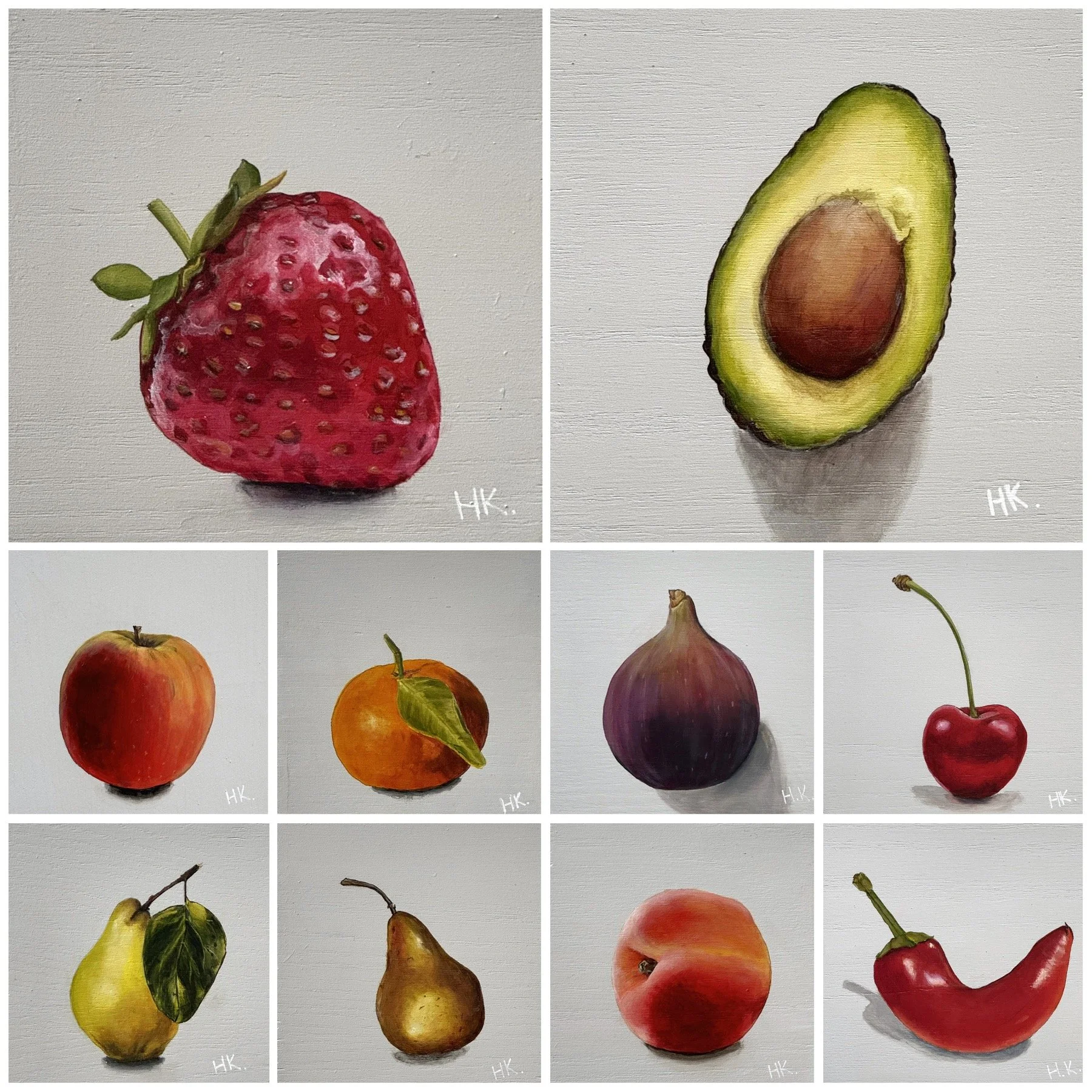
What began as a simple challenge to paint more regularly gradually became something else entirely. One small painting led to another, and before I knew it, tiny pears, lemons, blossoms and seed pods were finding their way into homes all over Australia.

At first I thought I was simply creating affordable artworks.

What I didn’t realise was that these little paintings would teach me as much as they taught the people who collected them.

Painting small requires a different kind of attention. There is nowhere to hide. Every brushstroke matters. Every decision feels important. The process asks me to slow down and truly look at what is in front of me.

Perhaps that is why I keep returning to them.

They remind me that beauty rarely demands attention. More often it waits quietly, tucked inside ordinary moments, a fallen blossom, a perfectly imperfect pear, a mushroom discovered on a morning walk.

The longer I paint, the more I believe that art isn’t really about creating something grand. It’s about noticing. And sometimes the smallest paintings are the ones that help us notice the most.

Enjoyed this?

The Studio Journal is where I share the stories behind my paintings, the beauty I notice while wandering through nature, and the small moments that remind me to slow down and really look.

If these reflections resonate with you, I’d love to welcome you to Studio Letters—my occasional letters from the studio, where I share new paintings, thoughtful stories, and invitations to see the world a little differently.

→ Join Studio Letters

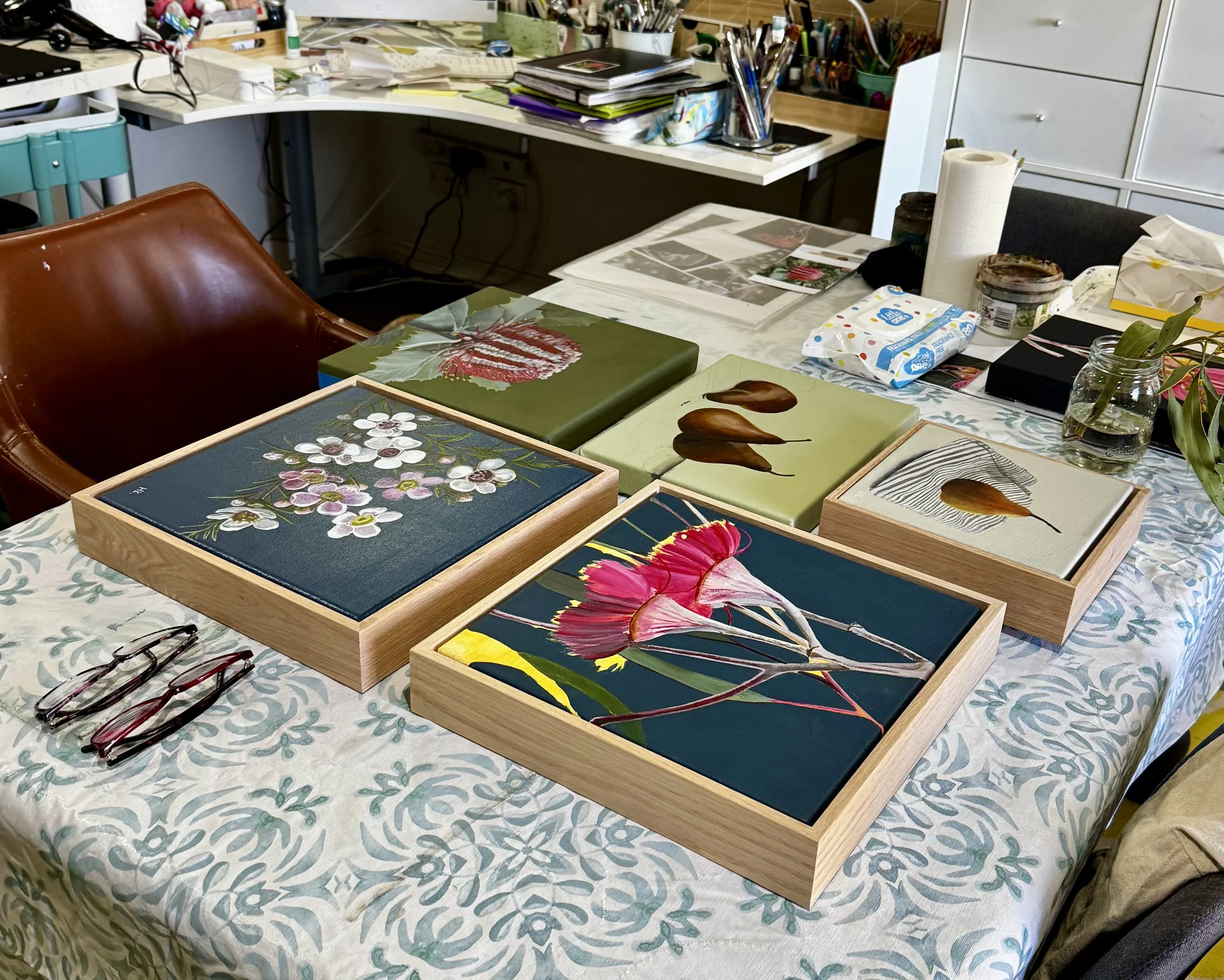
Bringing a New Collection to Life

There comes a moment with every collection when I realise it’s time to let it go.

For weeks—sometimes months—I’ve lived with these paintings. They’ve leaned against the studio walls, travelled between easels, and quietly kept me company as each layer of paint found its place. Slowly, almost without noticing, they begin to feel like old friends.

Then comes the final stage.

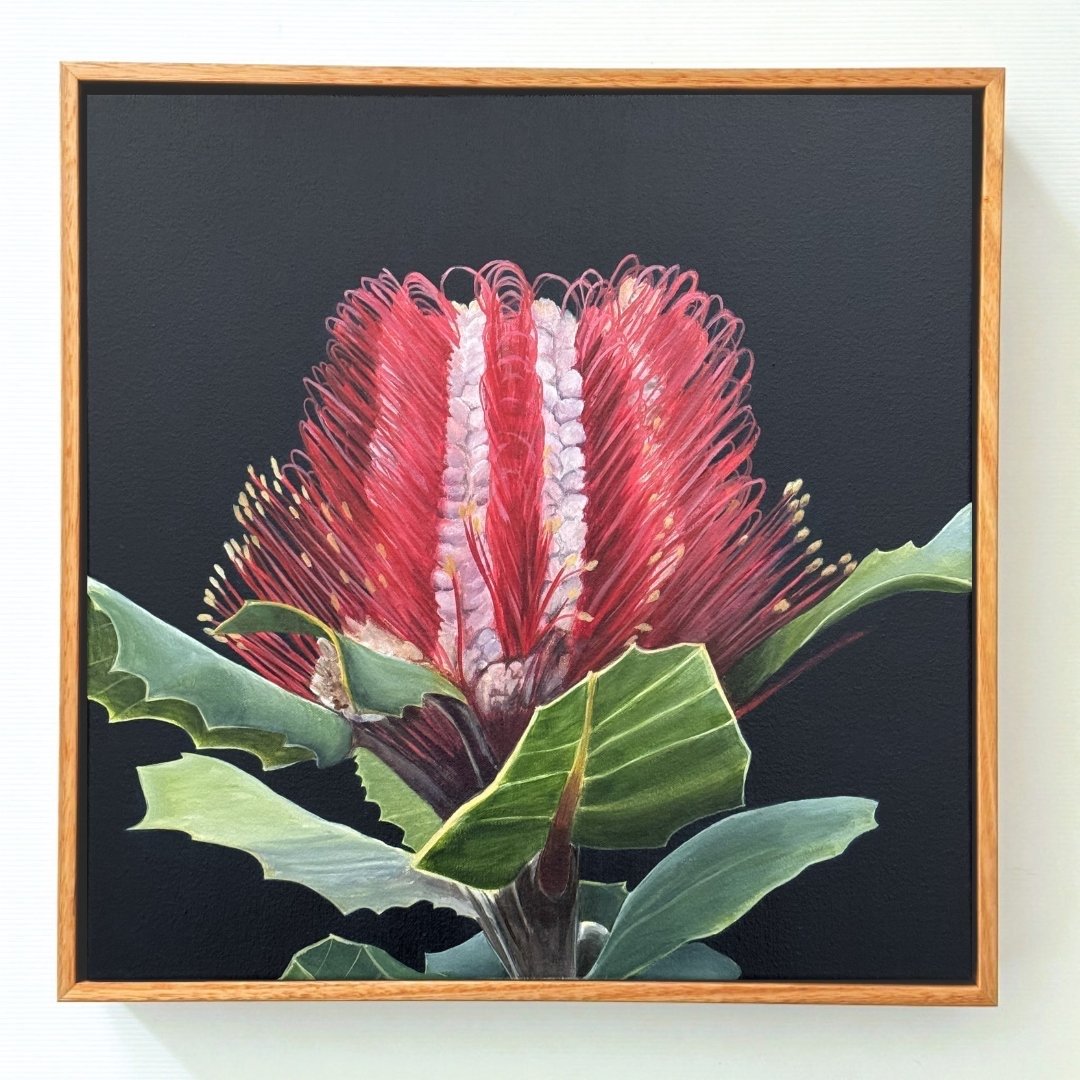
Each painting is carefully framed in hand-finished solid Tasmanian Oak, waxed and polished until the timber glows with a warm honey finish. It’s always one of my favourite moments. The frame doesn’t simply surround the artwork; it completes it, giving the painting a quiet sense of presence and permanence.

Only then does the collection feel ready to leave the studio.

Preparing a body of work is an emotional experience. There’s excitement, relief, and usually a little nervousness too. Every painting carries with it countless small decisions, moments of doubt, discoveries, and quiet victories that are invisible once it’s hanging on a wall.

I often wonder what someone else will notice first. Will they be drawn to the colour? The texture? The way the light catches a eucalyptus leaf or the intricate architecture of a banksia? Or perhaps they’ll simply feel something they can’t quite explain.

That’s one of the things I love most about sharing new work. Once a painting leaves my studio, its story continues in someone else’s home.

Whether my paintings are exhibited in galleries, shared through my website, or discovered during an open studio or workshop, I never take for granted the privilege of sharing them. Every new collection is an invitation to slow down for a moment and notice the extraordinary beauty woven through Australia’s native flora.

Thank you for following along, encouraging my work, and sharing this creative journey with me. Knowing these paintings are seen and appreciated is a gift I never stop being grateful for.

If you’d like to see what I’m currently working on, you can explore my latest original paintings in the gallery or browse the available collection here on my website.

Enjoyed this?

The Studio Journal is where I share the stories behind my paintings, the beauty I notice while wandering through nature, and the small moments that remind me to slow down and really look.

If these reflections resonate with you, I’d love to welcome you to Studio Letters—my occasional letters from the studio, where I share new paintings, thoughtful stories, and invitations to see the world a little differently.

→ Join Studio Letters

When Persistence Meets Opportunity

I am overjoyed to announce that I have emerged as an award-winning artist! This past week has been an exhilarating journey, and I couldn't be more grateful for your unwavering love and support on social media.

Read More

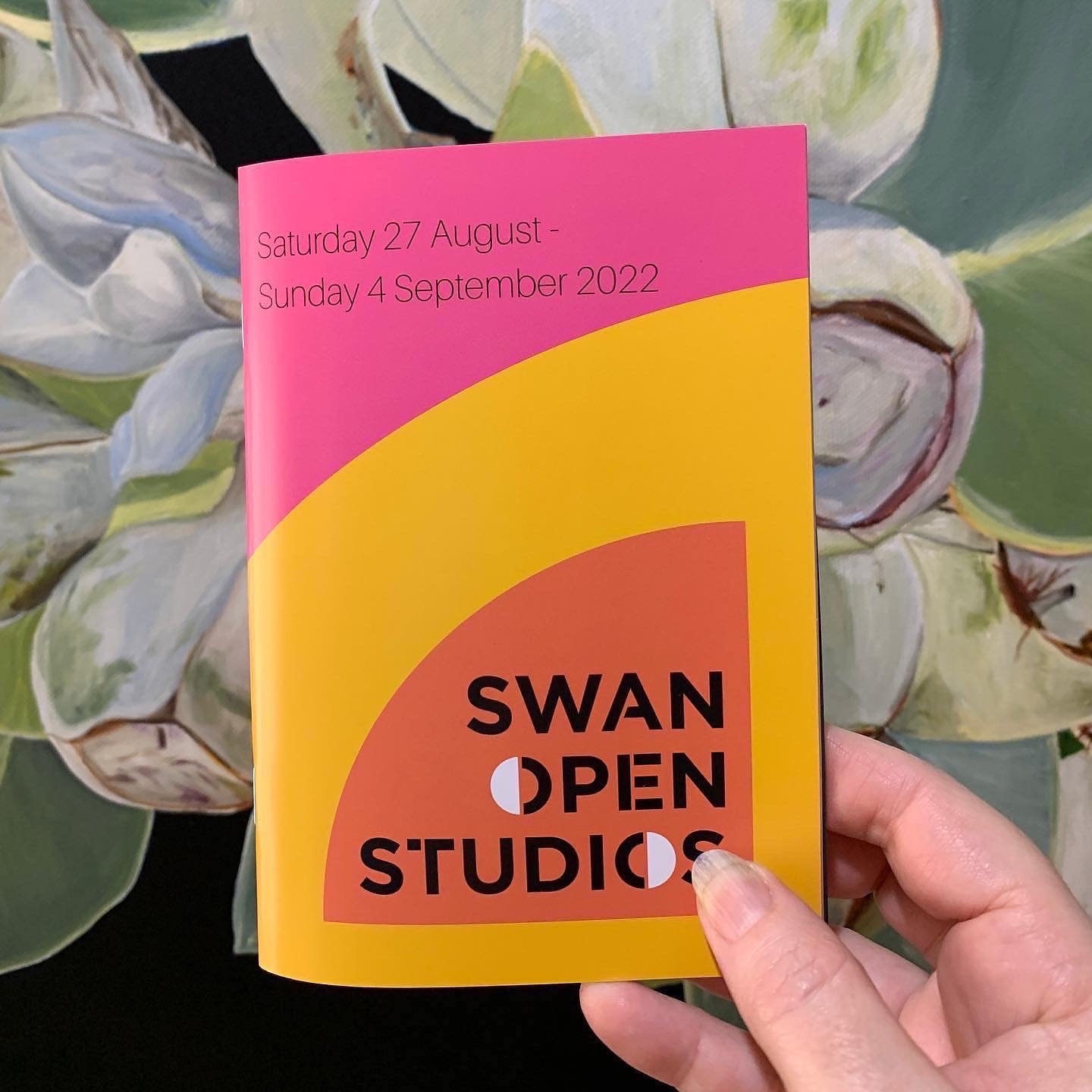
Swan open Open studios 2022

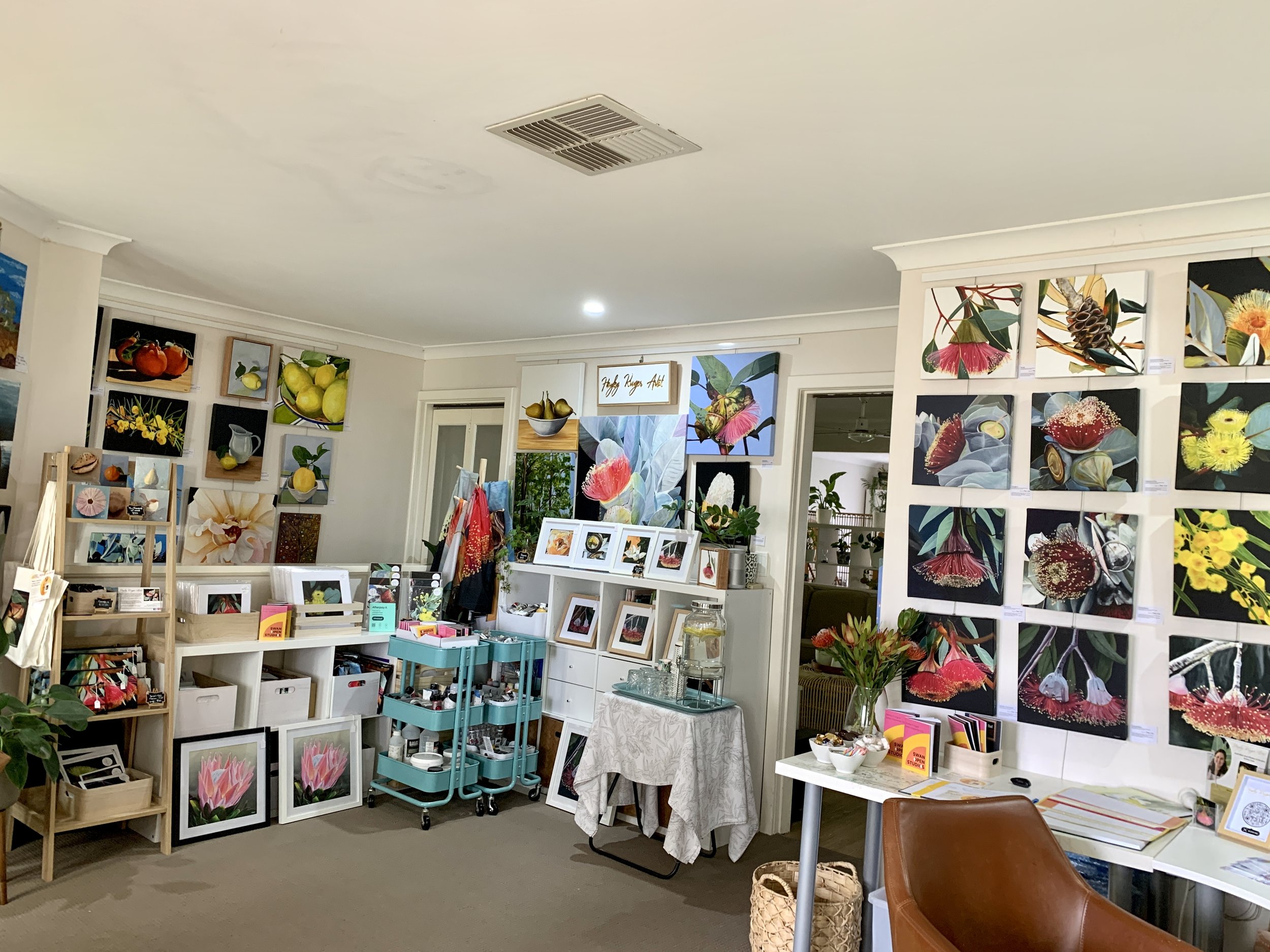
We had our first weekend of Swan Open Studios 2022 over the weekend. This event is in its infancy and as an artist led initiative we’re hoping it will grow from strength to strength over the coming years.

We live and work in the beautiful Swan Valley area which was established over 180 years ago.

It’s a hugely diverse area with many attractions including wineries, restaurants, beautiful scenery, heritage listings and of course a rich array of arts and culture.

Over 26 artists have thrown open their doors to invite the public in for a behind the scenes look into the fascinating life and practice of a variety of mediums. But I g art from the studio door is a unique and enriching experience.

Every home deserves to have beautiful art gracing its walls.

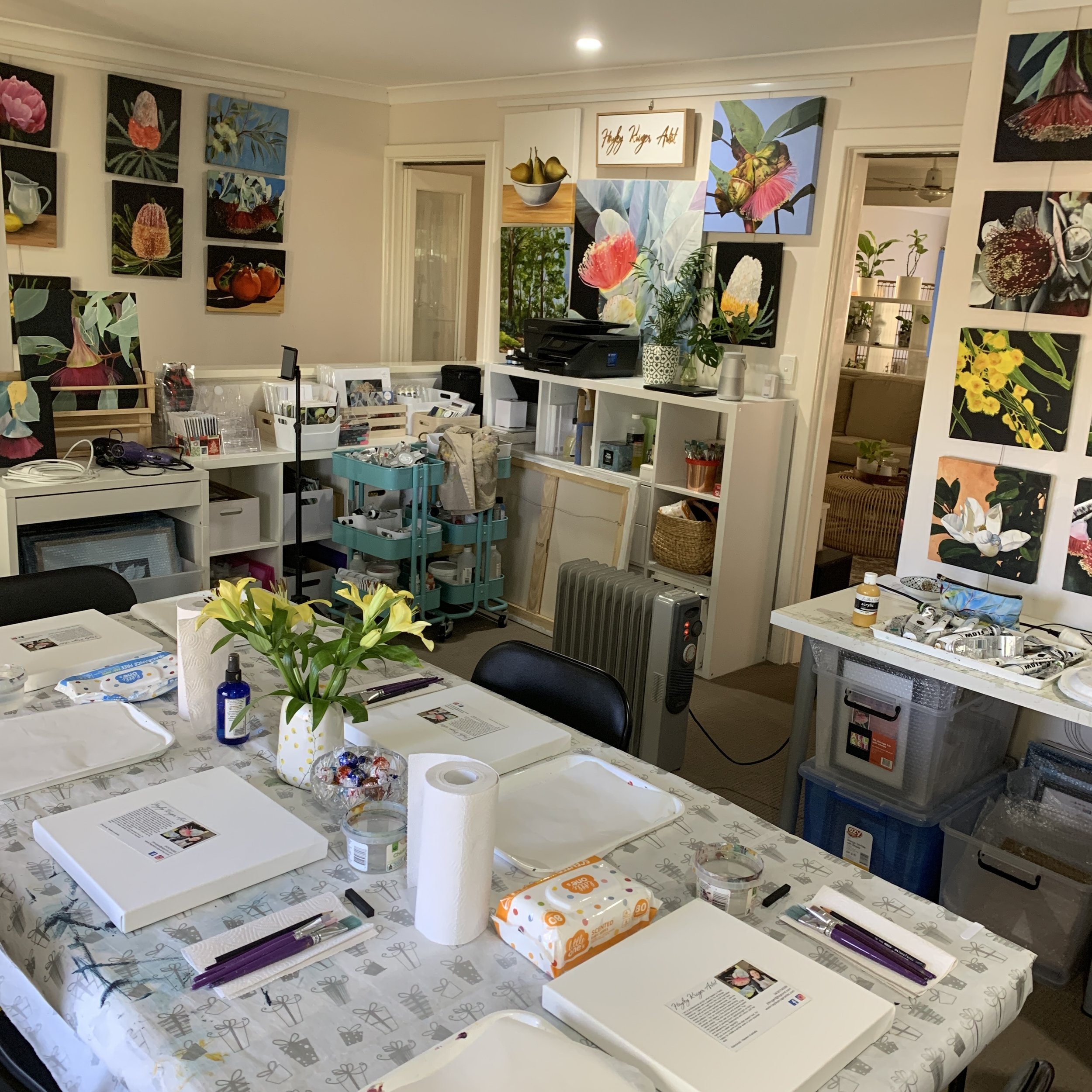
Paint with me in my STUDIO

It’s been such a beautiful experience enjoying smaller, more meaningful connections with you beautiful creatives in my studio space. It is a happy space for me and I’m discovering that others are enjoying it as much as I do.

This is just a little feedback I’ve received from the last few workshops in my studio.

“I just wanted to say thank you so much for having us in your studio on Friday and for your generous hospitality. It was a thoroughly enjoyable day and so great to pick up a paintbrush after a very long time! With kindest regards ~ E”

“Special thanks for all of your warmth and help during our art class on a Friday.
This was something I’ve never done before yet always wanted to, and how lucky we were that we got such a beautiful soul as yourself to be with. Thank you. ~ F”


“Thank you for the most amazing day & welcoming us into your home. It's such a private and beautiful space & your calming nature is contagious. We loved it, and you know I love you, your painting & tutelage.. can't wait til next time. ~ JM”

“Thanks to you I think I am slowly improving. I hope you do make your home workshops a regular thing, such an nice experience. I will definitely book again. ~ T”

What I listen to in my studio 🎶

The beautiful creatives that attend my workshops always comment on the choice of music being a pleasure. It’s never anything I wouldn’t listen to on a daily basis in my own space.
Being a child of the 80’s, it is a decade of music that always shows up in my paint sessions. I do have diverse taste in music and will often choose music to suit my mood or encourage a certain amount of productivity for a particular day.

I have chosen to share a favourite playlist created on Spotify that brings a smile to my face very single time. I hope you enjoy it as much as I do. Does music influence your mood? Perhaps you prefer to paint to audio books or podcasts instead? I’d love to hear if you have any favourites?

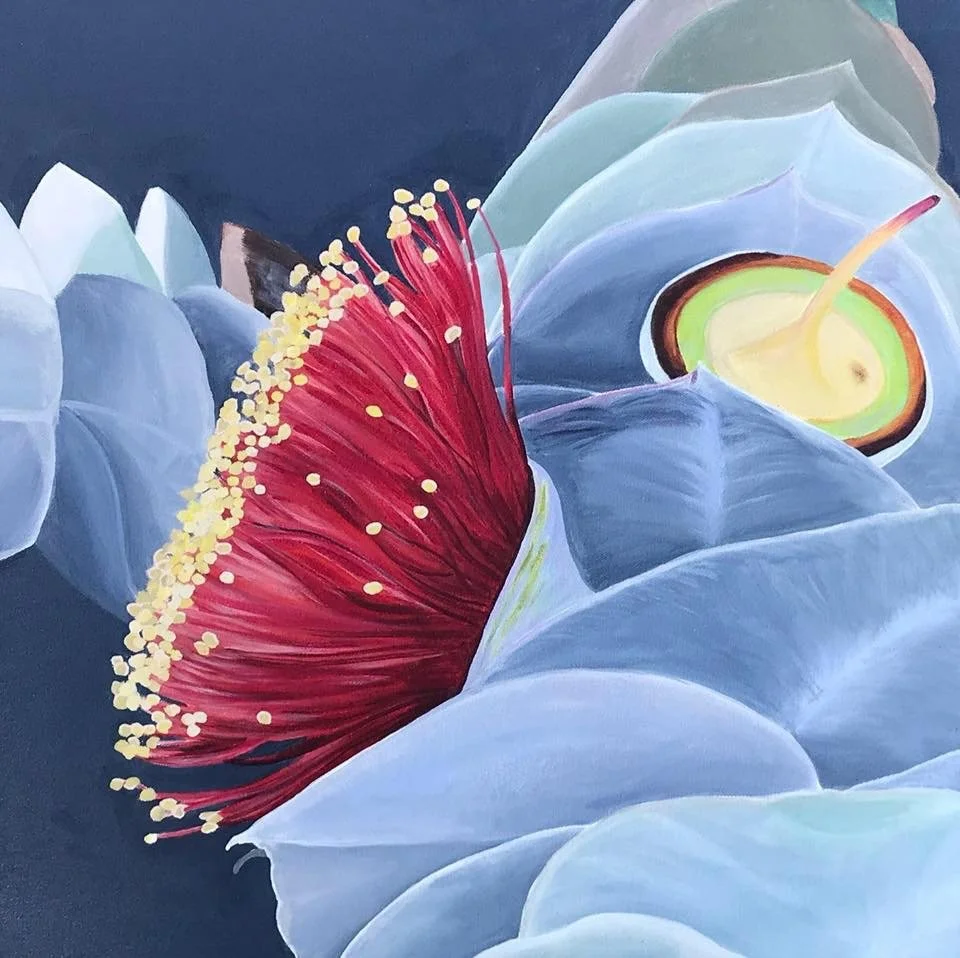
The First Eucalyptus

Some paintings quietly change the direction of your work without you realising it.

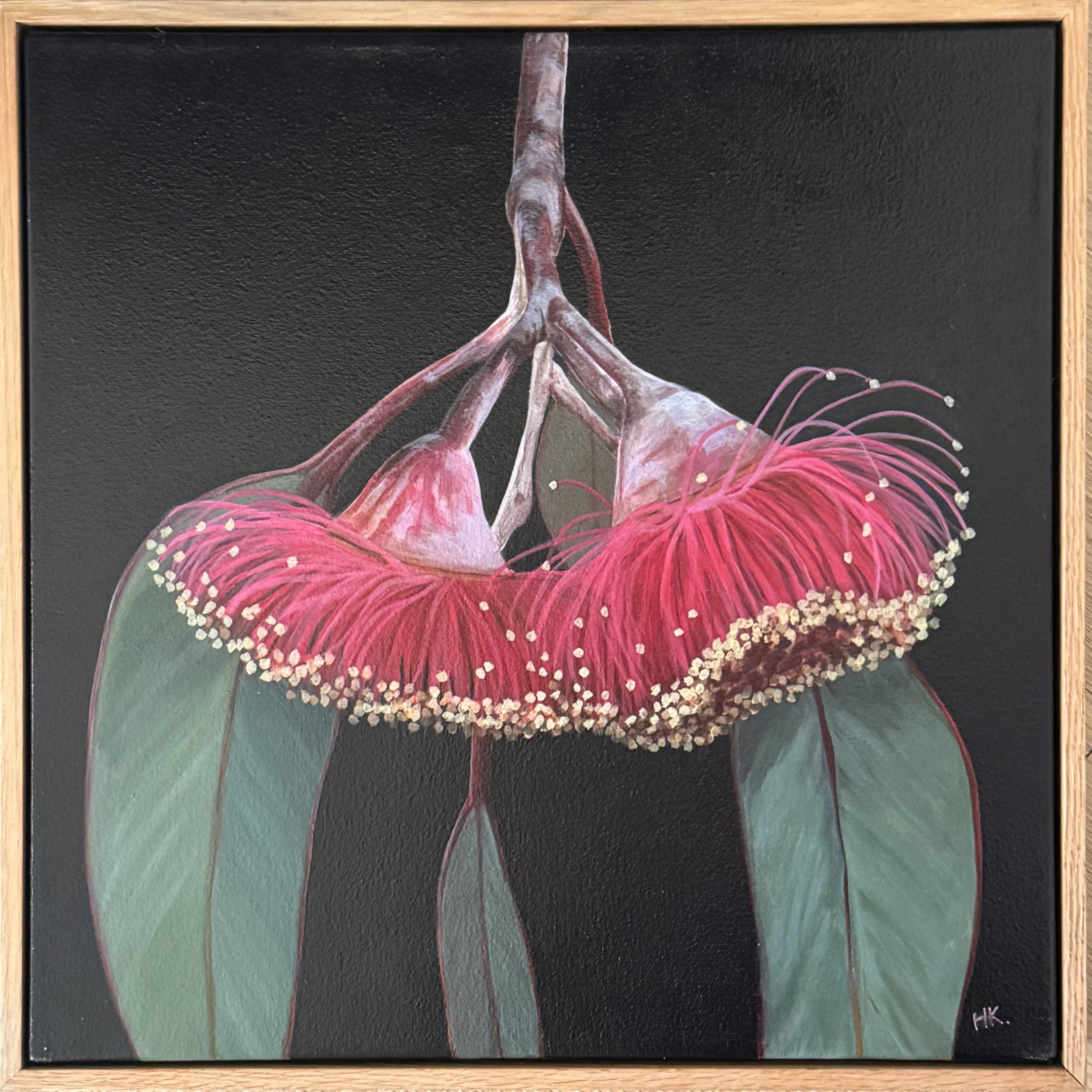
This was the first eucalyptus I ever painted.

At the time, I wasn’t thinking about building a body of work around Australian native flora. I simply couldn’t stop looking at those soft blue-grey leaves and the brilliant red gum blossom. There was something about the contrast that felt unmistakably Australian, yet wonderfully elegant.

Looking back now, I can see this painting was the beginning of a long conversation with eucalyptus.

Since then, those silvery leaves have appeared again and again on my easel. They’ve become one of the subjects I return to most often, not because they’re dramatic, but because they’re endlessly subtle. Every leaf catches the light differently. Every branch seems to have its own rhythm.

What surprised me most was what happened after I finished the painting.

It was licensed by John Sands, allowing it to find its way into homes around Australia in a completely different form. It also became one of the paintings I returned to in my workshops, sharing the process with hundreds of students over the years. Watching others discover that eucalyptus isn’t simply “green” has been just as rewarding as painting it myself.

When I compare this painting with the eucalyptus works I’m creating today, I can see how much my painting has evolved. My brushwork has softened. My understanding of light has deepened. I notice far more than I did back then.

But one thing hasn’t changed.

I’m still captivated by eucalyptus.

I still pause when I see the powdery blue leaves catching the afternoon light. I still find myself bringing home branches to place on the studio table. And I still believe there is extraordinary beauty hidden in these everyday Australian plants we so often walk past without really seeing.

Perhaps that’s what this painting gave me more than anything else.

It taught me to slow down and look.

And I’ve been looking ever since.

I choose happy!

I was asked yesterday, if I could choose one message to send through my business, what would it be?

Simple.

I CHOOSE HAPPY!!!

It really didn’t take much thought at all. You see, I started my creative journey to rediscover me.

Life is always messy and full of complications. If you wait for the perfect moment, life will just pass you by.

Seven years ago, I found myself question my value in life. I had given my all to raising my beautiful children. We had moved half way across the world and my body was broken. I had just been through back surgery. I was stuck at home. My body was healing, but my soul was yearning for more. I had lost my identity. You see, I loved being a mother and a wife and took my vocation very seriously. But, with the unexpected extra time on my hands while being physically forced to slow down, I started to question where I had vanished to?
This was a wake up call to my soul. In order to give of myself to my family and others, I needed to find something that would fill my cup. 
I picked up a brush and some acrylic paint and my world was transformed!

In that moment, I chose HAPPY!

To share in my journey daily, follow me on Instagram